


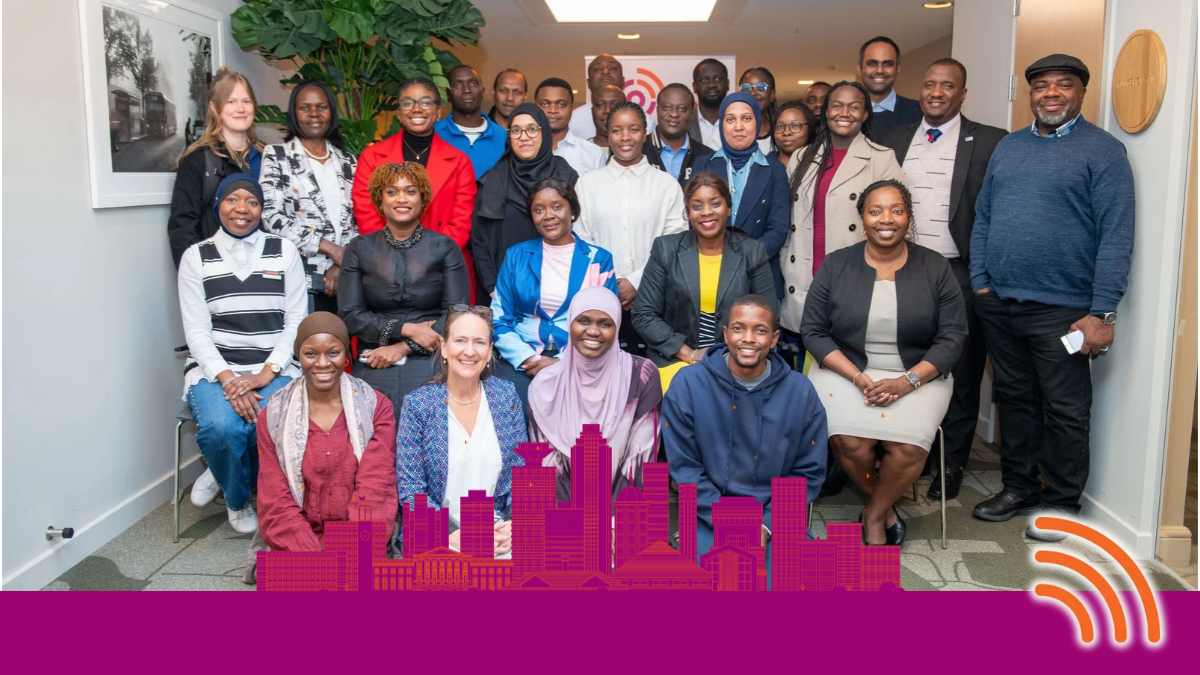
The iPRIS project will once again convene its eighth cohort this time in Nairobi Kenya, from 5th to 9th October 2026. Over five days, National Regulatory Authorities (NRAs) and Regional Regulatory Organisations (RROs) will gather to advance ongoing Change Initiatives (CIs) and deepen collaboration on some of the most pressing challenges shaping Africa’s digital future. The five‑day Nairobi session will bring together telecom experts from the Liberia Telecommunications Authority (LTA Liberia), Communications Regulatory Authority of Namibia (CRAN), Information and Communication Technologies Authority of Mauritius (ICTA), National Telecommunications Commission of Sierra Leone (NATCOM), Tanzania Communications Regulatory Authority (TCRA), and the Postal and Telecommunications Regulatory Authority of Zimbabwe (POTRAZ) to advance Change Initiatives (CIs) from policy concepts to practical regulatory action. They will be joined by implementing partners, SPIDER and the Swedish Post and Telecom Authority (PTS), representatives of the European Union, and regional regulatory organizations, including the Communications Regulators’ Association of Southern Africa (CRASA), the East African Communications Organisation (EACO), and the West Africa Telecommunications Regulators Assembly (WATRA).
The Nairobi phase will build directly on the outcomes of the previous convening in Stockholm in April 2026, where the 8th cohort experts discussed policy foresight and collaborative approaches. Lessons gained from the discussions will be adapted to African realities, ensuring that strategies are not only globally informed but also regionally relevant. Over the course of the week, participants will focus on translating these insights into practical regulatory action, strengthening institutional capacity, and advancing Change Initiatives that respond to Africa’s digital priorities.
Read more about the Stockholm round here.
Watch highlights from Stockholm below
Regional collaboration for digital inclusion in Africa
The 9th iPRIS cohort (a Francophone cohort including Cameroon, Chad, Senegal, Benin, Côte d’Ivoire, Mauritania, the Central African Republic and the Democratic Republic of Congo) recently completed its first meeting of the cycle in Luxembourg. In November, iPRIS will welcome its 10th cohort in Sweden, a remarkable milestone that will further expand the iPRIS network. As a growing community of regulatory experts, the regional collaboration is becoming increasingly evident. In 2026, Senegal, Benin, and Togo launched free roaming under the ECOWAS Regional Roaming Regulation, giving subscribers access to calls and data at local rates across borders. At the same time, Senegal and The Gambia advanced their bilateral roaming agreement to improve spectrum coordination and reduce interference, while the East African Community One Network Area continued to link Kenya, Uganda, Rwanda, and South Sudan with roaming‑free calls. These milestones show how countries are working together to lower costs and strengthen integration across Sub‑Saharan Africa.
Regional organisations have reinforced this momentum. At the WATRA AGM in Lomé, regulators examined roaming models to balance affordability and sustainability, while the CRASA AGM in Lilongwe explored the new G5 regulation framework for building adaptive digital systems. The Nairobi phase will also coincide with the EACO Working Group 5 (Broadcasting & Spectrum) meeting hosted by the Communications Authority of Kenya (CA). In 2026, CA launched its Digital Skilling Project, investing KSh 100 million to train 120,000 Kenyans across 19 counties, equipping citizens with digital skills for education, entrepreneurship, financial inclusion, and access to services. Together, these initiatives highlight how regional collaboration is shaping national programmes that deliver tangible benefits to communities.
What is in store for the experts
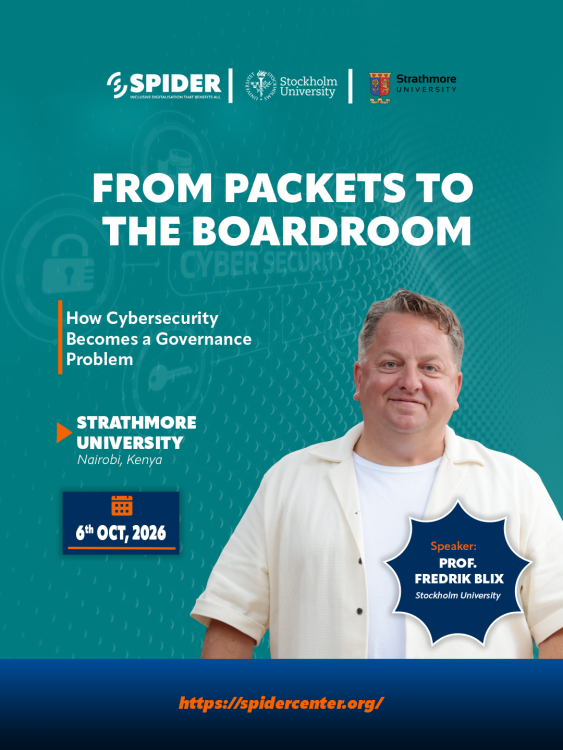
The programme will open with welcoming remarks and updates from the telecom experts on their Change Initiatives. Day 2 will cover foresight, inclusivity, project management, and MEAL. Day 3 will feature closed expert sessions to refine national strategies, while Day 4 will spotlight CA Kenya’s time in iPRIS, EACO Working Group 5, and a session on governing cybersecurity. The cybersecurity session will include discussions between the experts and Prof. Fredrik Blix, an associate professor and cybersecurity expert at Stockholm University. Prof. Blix will also hold a lecture and discussion at Strathmore University titled ‘From packets to the boardroom: How cybersecurity becomes a governance problem.'
The final day will conclude with way‑forward discussions as NRAs present their initiatives and outline next steps for implementation. Day 5 includes a session on how Kenya's telecom sector pioneered mobile money, just before the way-forward discussions. The session on the rise of M-Pesa will offer insights into how innovation and regulation can evolve together to expand digital access and financial inclusion.
Advancing the cycle
The Nairobi phase as part of the iPRIS 8th Cohort Cycle is not an end but a continuation of the journey that began in Stockholm earlier this year. It represents the next step in translating shared insights into practical action. As participants build on their Change Initiatives and strengthen cross-regional collaboration, the momentum created here will carry forward into future engagements. Each phase deepens the collective effort, reinforcing that regulatory transformation is an ongoing process.
Read more about the previous 7th, 6th, and 5th cohort meetings in Africa
iPRIS is coordinated and implemented by SPIDER in strategic and technical partnership with the Swedish Post and Telecom Authority (PTS), Institut luxembourgeois de régulation (ILR), Autoridade Nacional de Comunicações (ANACOM), as well as ARTAC, CRASA, EACO, and WATRA.
iPRIS is funded by the European Union, Sweden, and Luxembourg as part of the Team Europe Initiative “D4D for Digital Economy and Society in Sub-Saharan Africa” (Code: 001).