


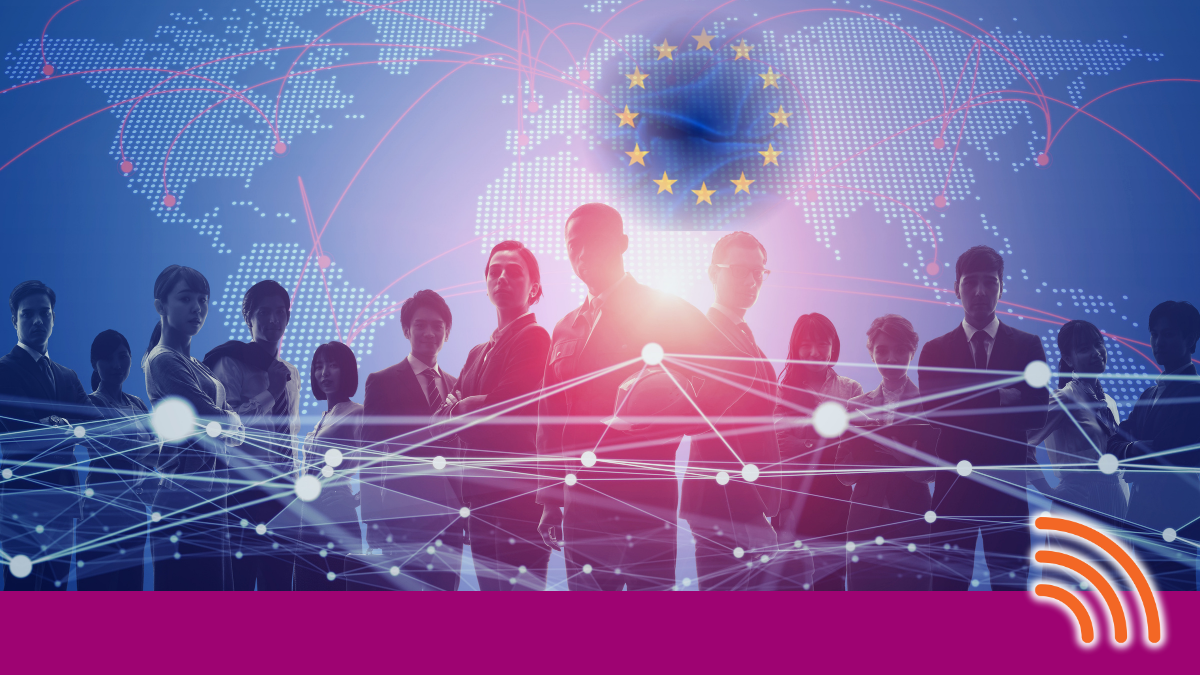
On 26th June 2026, a Digital for Development (D4D) convening, dubbed ‘Info session on the Team Europe Guide for Human-Centric Digital Cooperation under Global Gateway’, brought together policymakers, civil society leaders, and practitioners. The session featured contributions from Brigitte Lugin (European Commission), Uwimama, Yasia De Lausnay (Belgium Ministry of Foreign Affairs), Annriette Esterhuysen (Civil Society), and Cristina de Lorenzo, each offering perspectives on embedding rights, inclusivity, and sustainability into Europe’s digital cooperation agenda.
The guide itself is the product of co-creation between EU institutions, member states, civil society, academia, and the private sector. It provides methods, safeguards, and case studies to help practitioners ensure that digital transformation serves people first. The urgency of this initiative is underscored by global trends. The International Telecommunication Union (ITU) estimates that by 2025, more than 5.4 billion people were online, yet millions remain excluded due to affordability, skills gaps, and gender divides. The guide responds to this challenge by offering practical tools to ensure that digital transformation is not only about connectivity but about inclusion, trust, and sustainability.
Placing people at the centre
In her opening remarks, Brigitte Lugin emphasised that the guide is designed to keep citizens at the heart of digital transformation:
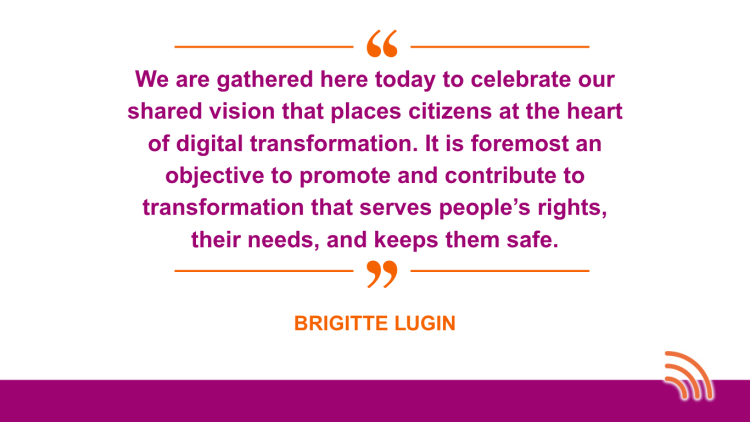
Her comments connected the guide to the EU’s Global Gateway strategy, which goes beyond infrastructure to secure sustainable, rights-based digital ecosystems. This framing made it clear that Europe’s digital cooperation is not just about technology but about safeguarding sovereignty and ensuring that the transformation benefits communities. Uwimama reinforced this operational focus, explaining that the guide is intended to move beyond rhetorical operations.
“This is about making the vision practical, ensuring that human-centric principles land on the ground and are applied across all investments.”
He pointed to the importance of equipping practitioners with concrete tools to embed safeguards into project design and implementation.
From principles to practice
The meeting highlighted how the guide translates principles into practice. Sabine, one of its authors, described how provisions such as access to Copernicus Earth observation data can support climate goals but must be paired with safeguards like sustainability checks and gender-sensitive applications. She also highlighted subsea cable projects such as Medusa and Ellalink, where dedicated access capacity is reserved for research institutions, a design choice that embeds human-centricity at the infrastructure level.
Another example came from Central Asia, where satellite connectivity investments were complemented by Team Europe initiatives that provided gender support, skills training, and capacity building. This demonstrated how technology investments can be balanced with social inclusion measures.
Guarding Against Risks
Representing Belgium, Yasia De Lausnay cautioned against treating values as optional:
“The moment we treat human rights, transparency, and inclusion as add-ins rather than built-in features, we lose our distinction from other actors.”
Her remarks underscored Europe’s credibility in digital cooperation, which depends on consistently embedding rights and inclusivity, even as investment and private-sector mobilisation accelerate.
Civil society voices reinforced this concern. Annriette Esterhuysen reminded participants:
“A human-rights approach to digital development places individuals at the centre of technological change, embedding principles such as equality, non-discrimination, accessibility, transparency, accountability and privacy throughout the design and governance of digital systems.”
Her intervention highlighted the risks of neglecting these safeguards, which could lead to exclusion, discrimination, or weakened trust in digital governance.
Building Common Understanding
From the civil society perspective, Cristina de Lorenzo emphasised that human-centric cooperation goes beyond usability: 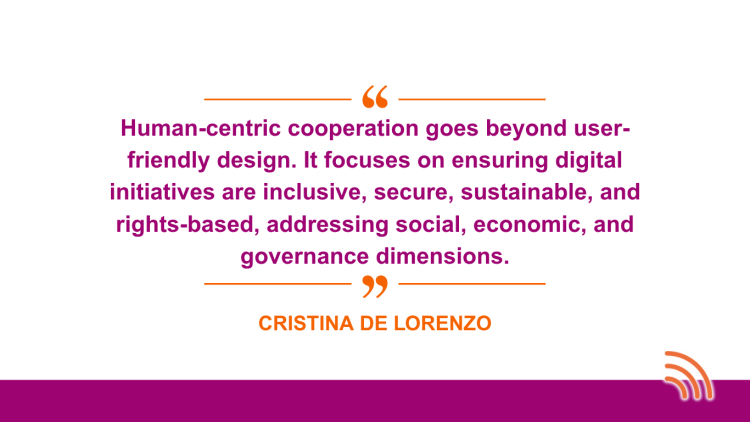
Her remarks tied the discussions back to the need for a common framework that can guide both European and Global South actors in implementing digital transformation responsibly. She also stressed that applying the guide consistently would strengthen multi-stakeholder partnerships and ensure that digital projects deliver real impact on the ground.
From Vision to Implementation
The session ultimately underscored a shared commitment: to make digital transformation genuinely human-centric, not just a slogan but a measurable practice. The Team Europe Guide was presented as a living tool that can help governments, development agencies, and civil society translate values into action. Its examples from Earth observation to AI innovation show how rights, sustainability, and inclusion can be embedded at every stage of digital cooperation.
This vision aligns closely with the work of iPRIS, which strengthens regulatory capacity across Africa through peer learning, collaboration, and evidence-based policymaking. Where the Team Europe Guide provides the framework, iPRIS delivers by equipping National Regulatory Authorities to apply human-centric principles in real-world contexts.
iPRIS is coordinated and implemented by SPIDER in strategic and technical partnership with the Swedish Post and Telecom Authority (PTS) and Institut luxembourgeois de régulation (ILR), as well as ARTAC, CRASA, EACO, and WATRA.
iPRIS is funded by the European Union, Sweden, and Luxembourg as part of the Team Europe Initiative “D4D for Digital Economy and Society in Sub-Saharan Africa” (Code: 001).