


Regional cooperation on roaming is moving from ambition to implementation, with West African regulators actively shaping practical, context-driven frameworks for more affordable and transparent cross-border connectivity.
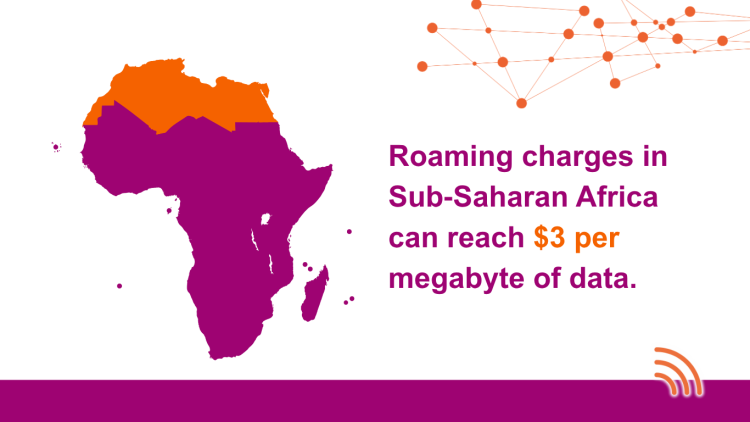
Today, the majority of citizens rely on mobile connectivity not only for communication but also for banking, media consumption, commerce, and access to public services. Yet the cost of using a phone outside one’s home country remains prohibitively high. International Telecommunication Union (ITU) reports indicate that roaming charges in Sub‑Saharan Africa can reach $3 per megabyte of data, a price that places everyday digital activities beyond the reach of many households. Affordable roaming is therefore more than a convenience; it is a foundation for regional integration, enabling people and businesses to stay connected, lowering trade barriers, and supporting the growth of a unified digital economy across the West African region. As of August 2025, 13 bilateral MOUs had been signed across 8 West Africa Telecommunications Regulators Assembly (WATRA) member states, with 9 already active (WATRA, 2025).
Read more insights concerning roaming in Sub-Saharan Africa from SPIDER Director Prof Caroline Wamala-Larsson here
At the 2026 Annual General Meeting of the West Africa Telecommunications Regulators Assembly (WATRA) in Lomé, Togo, regulators from across West Africa convened to address one of the region’s most persistent challenges: the high cost and complexity of mobile roaming. Held from April 20 to 24, 2026, the AGM convened national regulatory authorities (NRAs), field stakeholders, and development partners to advance the telecom landscape in the region.
The capacity-building workshop on roaming brought together NRAs to examine viable regulatory models, informed by international experience but grounded in regional realities. This workshop follows a recent online roaming workshop convened by WATRA, in partnership with the iPRIS project, organised by EY Baltic, and coordinated by SPIDER, on 19th February.
From principles to practical models
The workshop focused on translating global roaming frameworks into actionable pathways for West Africa. Experts from EY Baltic, including Paulius Žostautas, Olga Nodarou, Ioanna Choudalaki, and Andrejs Dombrovskis, presented regulatory approaches shaped by European and other international experiences. A central insight emerged clearly: there is no single model for roaming regulation. Instead, regulators must balance three critical dimensions:
- Consumer protection and affordability
- Operator cost recovery and sustainability
- Regional harmonisation and simplicity
Discussions explored different regulatory approaches, including benchmarking, cost-based models, and phased harmonisation strategies. Importantly, regulators examined how these models could evolve progressively, starting with simpler price caps and moving towards more advanced, cost-informed frameworks.
Addressing complexity with context
Across the sessions, West African regulators emphasised a key concern: global models must be adapted to regional and local market realities.
For example, discussions highlighted the limitations of “roam-like-at-local” approaches, which can introduce pricing complexity and reduce transparency for consumers. In contrast, more harmonised models, such as simplified price caps, were recognised as more user-friendly and predictable.
At the same time, regulators raised valid implementation challenges:
- High technical and financial requirements for cost modelling
- Diverse market structures across ECOWAS countries
- The need for phased, realistic transition pathways
In response, the experts outlined practical alternatives, including benchmarking against comparable markets to reduce implementation burden while still moving towards harmonisation.
Strengthening transparency and trust in the market
A recurring theme was the role of transparency in enabling effective regulation. Cost modelling, while complex, was presented as a tool to:
- Provide regulators with visibility into actual operator costs
- Strengthen regulatory decision-making
- Build trust when implementing stricter pricing rules
Equally, transparency for consumers, through clear pricing and communication, was identified as essential to improving user experience and adoption of roaming services.
Building the foundations for regional integration
Beyond pricing, the workshop addressed the broader technical and regulatory ecosystem required for a functional regional roaming framework. This included:
- Quality of service standards and monitoring
- Interoperability between operators
- Fraud mitigation and risk management
- Reference offers to standardise inter-operator agreements
A key takeaway was that regional roaming is not only a pricing issue, but a system-wide coordination challenge, requiring alignment between regulators, operators, and policymakers.
Peer learning and regional progress
The workshop demonstrated the value of iPRIS as a platform for peer exchange, where African regulators are not passive recipients of global models but active contributors shaping solutions for their context. As noted by Bengt G. Mölleryd, the strength of the session lay in its interactivity and relevance, connecting international expertise with the lived realities of West African markets.
Hosted with the support of ARCEP Togo, the convening also underscored the importance of national leadership in advancing regional agendas. The Lomé discussions signal a growing momentum towards a more integrated West African roaming space. The path forward is iterative, requiring:
- Phased implementation
- Continuous stakeholder engagement
- Strong regional coordination through platforms such as WATRA
For iPRIS, this engagement reinforces a core objective: supporting African regulators to lead, design, and implement reforms that improve connectivity outcomes across the continent.
iPRIS is coordinated and implemented by SPIDER in strategic and technical partnership with the Swedish Post and Telecom Authority (PTS) and Institut luxembourgeois de régulation (ILR), as well as ARTAC, CRASA, EACO, and WATRA.
iPRIS is funded by the European Union, Sweden, and Luxembourg as part of the Team Europe Initiative “D4D for Digital Economy and Society in Sub-Saharan Africa” (Code: 001).