The World Summit on the Information Society (WSIS) Forum is recognised as the foremost global event dedicated to shaping the future of digital development. It is convened annually by the International Telecommunication Union (ITU) in partnership with UNESCO, UNDP, and other United Nations agencies. The 2026 edition took place in Geneva, Switzerland, from 6 to 10 July 2026. The Forum brought together policymakers, regulators, academics, civil society representatives, and private-sector leaders to deliberate on strategies and partnerships to advance inclusive digital transformation. Its goal is to promote collaboration and knowledge exchange so that digital technologies become powerful instruments for sustainable development across all regions of the world. According to the ITU (2023), nearly 2.6 billion people worldwide remain offline, underscoring the urgency of initiatives to expand meaningful connectivity and bridge the digital divide.
Within this global conversation, SPIDER (Swedish Program for ICT in Developing Regions) hosted a WSIS session on 8 July 2026 titled “Enabling Inclusive Digital Development: Regulatory Capacity-Building through Multilingual Peer-to-Peer Learning between the EU and Sub-Saharan Africa.”The session focused on how telecom regulation plays a critical role in promoting sectors such as education, the economy, and healthcare, using iPRIS as a case study. What emerged was a deep exploration of how regulation, cooperation, and accessibility form the backbone of meaningful digital transformation. The panel was moderated by Aliyu Aboki, who guided the conversation with precision and insight. The speakers included Edna Soomre from SPIDER, Katarina Schyberg from the Swedish Post and Telecom Authority (PTS), Tantely Jeans from Luxembourg’s ILR, and Manuel Cabugueira from Portugal’s ANACOM. Each brought a distinct perspective shaped by their regulatory experience and regional context.
The discussion began with the recognition that regulation is not merely a technical framework but a social instrument that determines whether technology truly serves people.
She explained that SPIDER’s work through projects like iPRIS focuses on institutional strengthening, building trust, continuity, and resilience among regulators. She gave concrete examples of how iPRIS has helped regulators from sub-Saharan Africa collaborate across linguistic and regional boundaries. For instance, she described how regulators from Tanzania and Uganda worked together to harmonise guidelines for rural connectivity, ensuring underserved communities could access affordable, reliable networks. She also noted that iPRIS’ multilingual cycles in English, French, and Portuguese have allowed neighbouring countries that previously struggled to communicate effectively to now share regulatory frameworks and coordinate cross-border digital initiatives.
Katarina Schyberg expanded on the peer-to-peer learning model that defines iPRIS. She described how European and African regulators exchange experiences on shared challenges such as market competition, cybersecurity, and satellite communications.
Schyberg explained that during the six English-speaking cohorts conducted so far, regulators from nineteen English-speaking African countries have participated in intensive three-week knowledge-exchange sessions. Each delegate brings a national project (referred to as a Change Initiative) and refines it through collaboration with peers and experts from Africa and Europe. She cited examples of regulators from Kenya and Ghana who developed frameworks for consumer protection in digital services after learning from Sweden’s experience with transparent pricing and fair competition.
Aliyu Aboki underscored the importance of accessibility and language in ensuring effective collaboration.
His point resonated deeply with the multilingual nature of iPRIS, which bridges linguistic divides and fosters cooperation among English-, French-, and Portuguese-speaking regulators. Aboki highlighted that linguistic inclusion is not a symbolic gesture but a practical necessity, and without it, entire populations risk being excluded from digital progress.
Tantely Jeans of Luxembourg’s ILR brought a human dimension to the conversation, reminding the attendees that technology alone cannot guarantee progress.
She explained how ILR leverages European regulatory networks such as FRATEL and BEREC to connect African and European regulators. Jeans shared a compelling example of how Tanzanian and Gabonese regulators collaborated through iPRIS to coordinate the rollout of fibre infrastructure, ensuring orderly and efficient deployment. She also noted that, through the Francophone cycles, regulators from countries such as Senegal and Benin have worked with European counterparts to develop data governance frameworks that balance innovation with privacy protection.
Adding an economic perspective, Manuel Cabugueira of ANACOM reflected on how regulatory cooperation extends beyond learning and technology sharing.
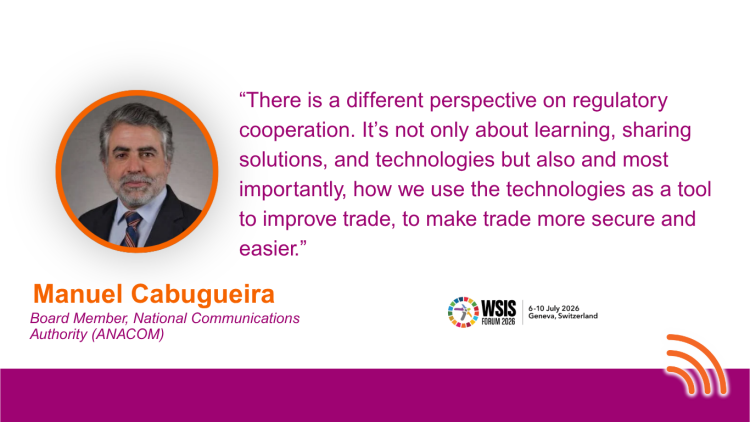
He explained that ANACOM’s collaboration with Portuguese-speaking regulators through the ARCTEL network has shown how harmonised regulation can strengthen trade and economic ties across Africa. Cabugueira pointed to examples from Angola and Mozambique, where regulators have worked together to align telecommunications standards, enabling smoother cross-border data flows and more secure digital transactions. He also emphasised that cooperation among Lusophone countries, from Guinea-Bissau and Cape Verde to São Tomé and Príncipe, lays the foundation for building digital infrastructure that supports data centres, edge computing, and secure digital commerce.
Throughout the session, the panellists returned to a central theme: that Africa’s digital transformation must be built not only on infrastructure but on strong institutions capable of adapting to emerging challenges such as artificial intelligence, cybersecurity, satellite services, and digital identity.
The session’s richness was amplified by contributions from delegates who had participated in earlier iPRIS cohorts. Winnie Mukholi, representing the Uganda Communications Commission, spoke about her experience in the fifth iPRIS cycle. She explained that one of the most valuable aspects was the chance to interact not only with European regulators but also with peers from across Africa. By engaging with colleagues from Tanzania, West Africa, and Southern Africa, she discovered that many regulatory challenges are shared across the continent. Winnie emphasised that this regional exchange allowed her to benchmark solutions directly with neighbouring countries, making regulatory initiatives more practical and responsive. She noted that iPRIS provided guidance to ensure that change initiatives begun during the project were carried through to completion, rather than left unfinished, which is a critical factor in building institutional credibility.
Adding to this, Mbongeni Bafana Mtshali from the Kingdom of Eswatini highlighted the importance of peer education in finding African solutions to African challenges. He explained that while European expertise, such as that shared by PTS, is invaluable, the opportunity to learn from fellow African regulators is equally vital. He described how visits to institutions like Ericsson opened his eyes to the scale of investment and research shaping global telecommunications, and how participation in international forums such as WSIS helps African regulators influence the global digital landscape. Mbongeni urged more member states to join iPRIS, stressing that the project not only strengthens regulatory capacity but also builds a community that can collectively shape Africa’s digital future.
To conclude the session, a significant milestone was marked with the signing of a Memorandum of Understanding (MoU) between SPIDER and ANACOM. The agreement formalised a strategic partnership to deepen collaboration with Lusophone countries across Africa, including Angola, Mozambique, Cape Verde, Guinea-Bissau, and São Tomé and Príncipe. The MoU represents a commitment to advance regulatory capacity-building and digital cooperation within Portuguese-speaking nations, aligning with iPRIS’s multilingual approach to inclusive digital development.
This WSIS Forum 2026 session demonstrated that meaningful connectivity is not just about connecting people to networks; it is about connecting them to opportunity. The discussions made clear that investment in infrastructure must be matched by investment in institutions. Digital transformation succeeds when it is inclusive, collaborative, and guided by trust and equity. Through initiatives like iPRIS, regulators across Africa and Europe are building the foundations of a digital future that is not only connected but truly inclusive.
iPRIS is coordinated and implemented by SPIDER in strategic and technical partnership with the Swedish Post and Telecom Authority (PTS), Institut luxembourgeois de régulation (ILR), Autoridade Nacional de Comunicações (ANACOM), as well as ARTAC, CRASA, EACO, and WATRA.
iPRIS is funded by the European Union, Sweden, and Luxembourg as part of the Team Europe Initiative “D4D for Digital Economy and Society in Sub-Saharan Africa” (Code: 001).
On 26th June 2026, a Digital for Development (D4D) convening, dubbed ‘Info session on the Team Europe Guide for Human-Centric Digital Cooperation under Global Gateway’, brought together policymakers, civil society leaders, and practitioners. The session featured contributions from Brigitte Lugin (European Commission), Uwimama, Yasia De Lausnay (Belgium Ministry of Foreign Affairs), Annriette Esterhuysen (Civil Society), and Cristina de Lorenzo, each offering perspectives on embedding rights, inclusivity, and sustainability into Europe’s digital cooperation agenda.
The guide itself is the product of co-creation between EU institutions, member states, civil society, academia, and the private sector. It provides methods, safeguards, and case studies to help practitioners ensure that digital transformation serves people first. The urgency of this initiative is underscored by global trends. The International Telecommunication Union (ITU) estimates that by 2025, more than 5.4 billion people were online, yet millions remain excluded due to affordability, skills gaps, and gender divides. The guide responds to this challenge by offering practical tools to ensure that digital transformation is not only about connectivity but about inclusion, trust, and sustainability.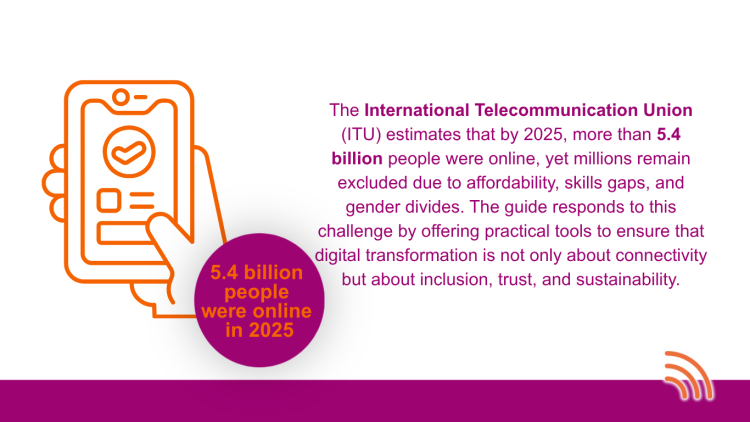
In her opening remarks, Brigitte Lugin emphasised that the guide is designed to keep citizens at the heart of digital transformation:
Her comments connected the guide to the EU’s Global Gateway strategy, which goes beyond infrastructure to secure sustainable, rights-based digital ecosystems. This framing made it clear that Europe’s digital cooperation is not just about technology but about safeguarding sovereignty and ensuring that the transformation benefits communities. Uwimama reinforced this operational focus, explaining that the guide is intended to move beyond rhetorical operations.
“This is about making the vision practical, ensuring that human-centric principles land on the ground and are applied across all investments.”
He pointed to the importance of equipping practitioners with concrete tools to embed safeguards into project design and implementation.
The meeting highlighted how the guide translates principles into practice. Sabine, one of its authors, described how provisions such as access to Copernicus Earth observation data can support climate goals but must be paired with safeguards like sustainability checks and gender-sensitive applications. She also highlighted subsea cable projects such as Medusa and Ellalink, where dedicated access capacity is reserved for research institutions, a design choice that embeds human-centricity at the infrastructure level.
Another example came from Central Asia, where satellite connectivity investments were complemented by Team Europe initiatives that provided gender support, skills training, and capacity building. This demonstrated how technology investments can be balanced with social inclusion measures.
Representing Belgium, Yasia De Lausnay cautioned against treating values as optional:
“The moment we treat human rights, transparency, and inclusion as add-ins rather than built-in features, we lose our distinction from other actors.”
Her remarks underscored Europe’s credibility in digital cooperation, which depends on consistently embedding rights and inclusivity, even as investment and private-sector mobilisation accelerate.
Civil society voices reinforced this concern. Annriette Esterhuysen reminded participants:
“A human-rights approach to digital development places individuals at the centre of technological change, embedding principles such as equality, non-discrimination, accessibility, transparency, accountability and privacy throughout the design and governance of digital systems.”
Her intervention highlighted the risks of neglecting these safeguards, which could lead to exclusion, discrimination, or weakened trust in digital governance.
From the civil society perspective, Cristina de Lorenzo emphasised that human-centric cooperation goes beyond usability: 
Her remarks tied the discussions back to the need for a common framework that can guide both European and Global South actors in implementing digital transformation responsibly. She also stressed that applying the guide consistently would strengthen multi-stakeholder partnerships and ensure that digital projects deliver real impact on the ground.
The session ultimately underscored a shared commitment: to make digital transformation genuinely human-centric, not just a slogan but a measurable practice. The Team Europe Guide was presented as a living tool that can help governments, development agencies, and civil society translate values into action. Its examples from Earth observation to AI innovation show how rights, sustainability, and inclusion can be embedded at every stage of digital cooperation.
This vision aligns closely with the work of iPRIS, which strengthens regulatory capacity across Africa through peer learning, collaboration, and evidence-based policymaking. Where the Team Europe Guide provides the framework, iPRIS delivers by equipping National Regulatory Authorities to apply human-centric principles in real-world contexts.
iPRIS is coordinated and implemented by SPIDER in strategic and technical partnership with the Swedish Post and Telecom Authority (PTS) and Institut luxembourgeois de régulation (ILR), as well as ARTAC, CRASA, EACO, and WATRA.
iPRIS is funded by the European Union, Sweden, and Luxembourg as part of the Team Europe Initiative “D4D for Digital Economy and Society in Sub-Saharan Africa” (Code: 001).
This year’s World Summit on the Information Society (WSIS) Forum will take place from 6 to 10th July 2026 in Geneva, Switzerland, bringing together global leaders, policymakers, regulators, civil society organisations, private sector representatives, academics, and development partners to explore how digital technologies can advance sustainable development and foster inclusive digital transformation worldwide.
As part of the WSIS Forum 2026 agenda, the Swedish Program for ICT in Developing Regions (SPIDER) will host a session on Wednesday 8th July 2026. The discussions will focus on advancing digital transformation in Sub-Saharan Africa by strengthening regulatory capacity and inclusive frameworks and initiatives. The session will be held under the theme: Enabling Inclusive Digital Development in Sub-Saharan Africa: Regulatory Capacity-Building through Multilingual Peer-to-Peer Learning. The panel discussion will feature five delegates from the implementing partners and stakeholders of the iPRIS project. The discussions will be moderated by Aliyu Yusuf Aboki, Executive Secretary of WATRA, who will also outline the digital transformation agenda from an African regional perspective.
Edna Soomre, project lead of the iPRIS project at SPIDER, will open the discussion with a presentation on human-centred digital transformation, examining how initiatives that consider intersectionality in the digital space can help ensure that digital technologies contribute meaningfully to social and economic development. Katarina Schyberg, iPRIS project manager at the Swedish Post and Telecom Authority (PTS), will discuss the value of the European Union-Africa regulatory exchange and peer learning. Her discussions will highlight how cross-border collaboration strengthens regulatory capacity and supports digital transformation efforts.
Tantely Jeans, an iPRIS Project Manager at the Institut Luxembourgeois de Régulation (ILR), will explore the role of multilingual capacity-building in advancing Francophone regulatory cooperation and facilitating knowledge exchange among telecom regulators. Manuel Cabugueira, a Board Member at the National Communications Authority (ANACOM), will present the upcoming iPRIS Lusophone cohort to expand regulatory collaboration and peer-learning opportunities across Lusophone Africa. Finally, Aliyu Yusuf Aboki, executive secretary of the West Africa Telecommunications Regulators Assembly (WATRA), will share insights into WATRA's efforts to strengthen regional regulatory cooperation and promote harmonised approaches to digital development across West Africa.
Through these discussions, the session will demonstrate how multilingual peer-to-peer learning, regional cooperation, and inclusive regulatory frameworks can help accelerate Africa’s digital transformation agenda while ensuring that no one is left behind in the digital age.
Register online to follow the sessions live: https://www.itu.int/net4/wsis/forum/2026/Agenda/Session/158
iPRIS is coordinated and implemented by SPIDER in strategic and technical partnership with the Swedish Post and Telecom Authority (PTS) and Institut luxembourgeois de régulation (ILR), as well as ARTAC, CRASA, EACO, and WATRA.
iPRIS is funded by the European Union, Sweden, and Luxembourg as part of the Team Europe Initiative “D4D for Digital Economy and Society in Sub-Saharan Africa” (Code: 001).
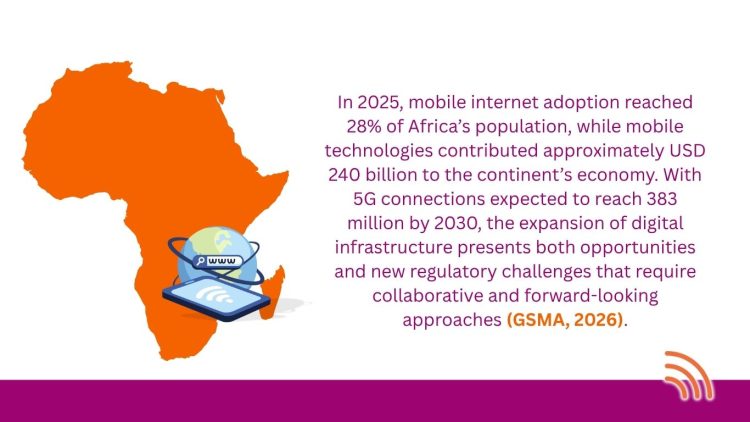
Africa's digital transformation is accelerating, driven by growing investments in connectivity, digital infrastructure, and emerging technologies. Across East, West, South, and Central Africa, ICT and telecommunications experts are working to expand access to meaningful connectivity and ensure that digital opportunities contribute to inclusive economic and social development. In the digital transformation journey, telecom regulators play an increasingly important role in creating an enabling environment that supports innovation, promotes fair competition, protects consumers, and encourages sustainable investment.
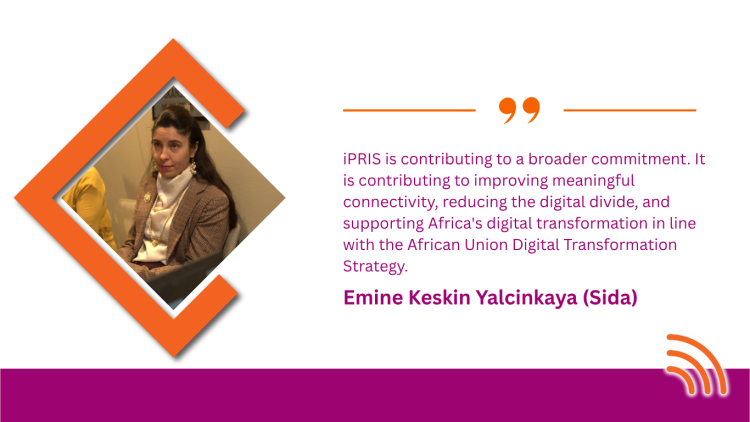
Building on this, the fifth iPRIS cohort brought together telecom experts from six countries across the four regions of Sub-Saharan Africa, Regional Regulatory Authorities (RROs), implementing partners, including the Swedish Post and Telecom Authority (PTS) and the Swedish Program for ICT in Developing Regions (SPIDER), and European partners. The cohort included NRAs from the Nigerian Communications Commission (NCC), the Tanzania Communications Regulatory Authority (TCRA), the Zambia Information & Communications Technology Authority (ZICTA), the Uganda Communications Commission (UCC), the Eswatini Communications Commission (ESCCOM), and the National Communications Authority (NatCA). Through the programme, participants developed and implemented Change Initiatives (CIs) designed to address regulatory challenges, strengthen institutional capacity, and contribute to Africa's broader digital transformation agenda.
On 4th May 2025, the fifth iPRIS cohort commenced its year-long journey of knowledge exchange, capacity building, and regional collaboration. The project provided a platform for technical training, peer-to-peer learning, and practical implementation.
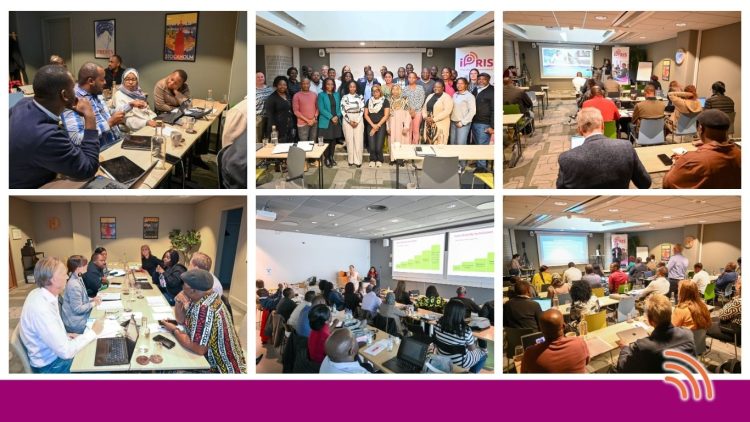
The first phase of the 5th cohort journey officially commenced in Stockholm, Sweden, where regulatory experts gathered for intensive knowledge exchange and capacity building. For two and a half weeks, delegates engaged in discussions, peer-to-peer learning, and technical sessions to strengthen their regulatory capacity.
Over the two and a half weeks, delegates were introduced to various approaches, frameworks, and methodologies to advance and ensure the meaningful implementation of their Change Initiatives. These included Diversity, Equity and Inclusion (DEI) approaches, Monitoring, Evaluation, Accountability and Learning (MEAL), and project management methodologies facilitated by SPIDER digital development experts. Together, these frameworks played a critical role in equipping regulators with the tools needed to design, implement, and assess regulatory interventions effectively and inclusively.
PTS played an important role in strengthening the 5th cohort's iPRIS journey by providing, through technical sessions, exposure to key areas shaping the telecommunications landscape. These included numbering and addressing systems, spectrum management, broadband mapping, network deployment strategies, and secure communications infrastructure. Through these sessions, both African and European telecom experts shared experiences, discussed common regulatory challenges, and explored practical solutions from different regulatory contexts. The sessions reinforced the value of cross-regional collaboration and demonstrated how diverse perspectives can contribute to more effective and forward-looking regulatory approaches.
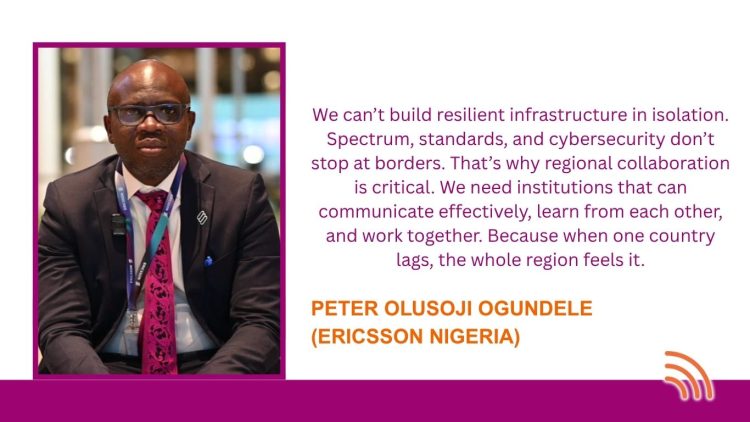
Regional Regulatory Organisations also played a central role throughout the programme. Representatives from the West Africa Telecommunications Regulators Assembly (WATRA), the Communications Regulators' Association of Southern Africa (CRASA), and the East African Communications Organisation (EACO) contributed valuable regional perspectives and insights. These institutions provided a broader regional lens through which delegates could situate their Change Initiatives, aligning them with ongoing harmonisation efforts across Africa. Through dialogue and structured engagement, the NRAs gained insights into shared regulatory priorities, cross-border challenges, and opportunities for coordinated action.
Following the first cycle, participants returned to their respective countries with refined project plans, strengthened technical expertise, and renewed confidence in their ability to drive meaningful change.
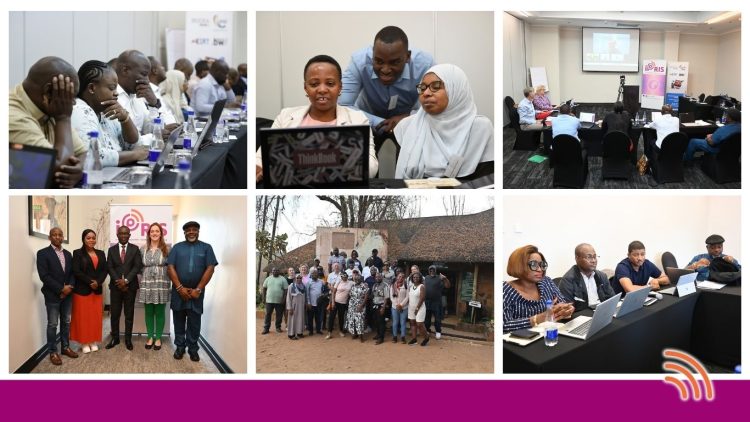
Four months later, the cohort reconvened in Botswana for an African follow-up phase, hosted by the Botswana Communications Regulatory Authority (BOCRA). The session focused on reviewing progress, presenting early results, and exchanging implementation experiences. The discussions created a valuable platform for peer learning. Regulators compared experiences across countries, identified common obstacles, and exchanged practical solutions informed by real-world implementation.
With support from SPIDER, PTS, and representatives from WATRA, CRASA, and EACO, delegates revisited their project plans and refined them to ensure they remained practical, inclusive, and impactful. The Botswana phase reinforced the importance of continuous learning and of ensuring that the projects' impact is inclusive and drives meaningful change across communities.
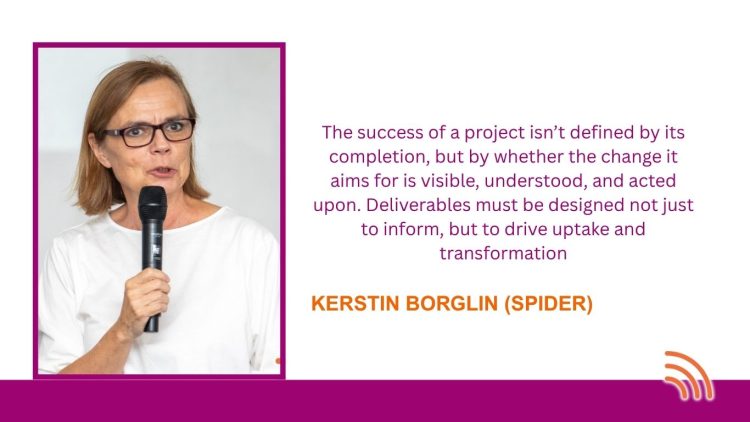
The cohort returned once again to implementation, applying revised strategies and consolidating progress within their institutions.
Read more about the 5th cohort Africa follow-up phase in Botswana, here
On 11th June 2026, the fifth iPRIS cohort convened for the final time in an online wrap-up session, marking the end of their year-long journey. Unlike previous meetings, this session was not focused on redesign or adjustment, but rather on consolidation and recognition of outcomes. The delegates presented the final results of their change Initiatives, showcasing how initial project ideas had evolved into fully implemented interventions with measurable impact.
The presentations covered diverse telecom sectors across participating countries. Some Change Initiatives focused on improving infrastructure deployment processes to accelerate the rollout of connectivity, while others addressed spectrum planning and optimisation to enhance the efficient use of national resources. Others strengthened consumer protection frameworks, improved market transparency, and advanced the use of evidence-based decision-making within regulatory institutions. Collectively, these initiatives demonstrated the practical value of targeted capacity-building in strengthening telecommunications governance.
The final session was concluded by Edna Soomre from SPIDER, who delivered a reflective message to the cohort, acknowledging their commitment and achievements throughout the programme.
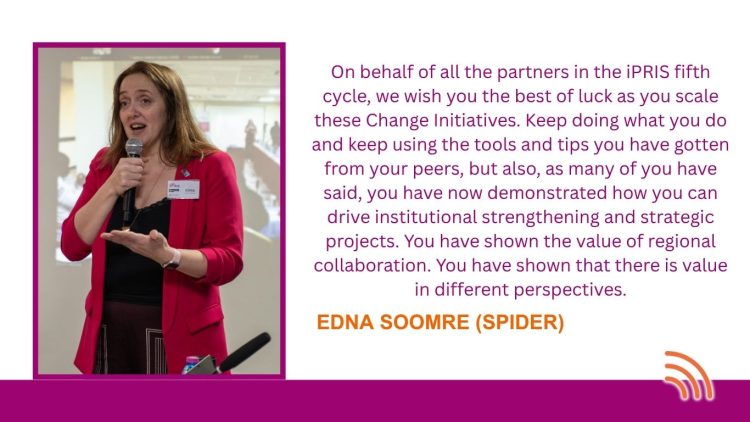
As the fifth iPRIS cohort concludes its cycle, its legacy is reflected in strengthened regulatory institutions, enhanced technical capacity, and deeper regional cooperation among telecom regulators. While the formal programme has ended, the networks formed, the knowledge gained, and the Change Initiatives implemented continue to shape regulatory practice across participating countries. The fifth iPRIS cohort emphasised the importance of structured collaboration and capacity-building in navigating the complexities of an evolving digital landscape and contributing meaningfully to Africa’s digital transformation.
iPRIS is coordinated and implemented by SPIDER in strategic and technical partnership with the Swedish Post and Telecom Authority (PTS) and Institut luxembourgeois de régulation (ILR), as well as ARTAC, CRASA, EACO, and WATRA.
iPRIS is funded by the European Union, Sweden, and Luxembourg as part of the Team Europe Initiative “D4D for Digital Economy and Society in Sub-Saharan Africa” (Code: 001).
From 12th to 15th of May, the government of Türkiye held the Global Symposium for Regulators (GSR-26) at the Information and Communication Technologies Authority (BTK) Headquarters in Ankara, Türkiye. The International Telecommunication Union (ITU) hosts an annual global knowledge exchange, bringing together around 1035 participants and 15 Regional Regulatory Associations. This year’s sessions focused on the theme “Navigating the Digital Frontier.” The summit was chaired by Mr. Ömer Abdullah Karagözoğlu, President of the Information and Communication Technologies Authority (BTK).
Ms Doreen Boggan-Martin, Secretary-General of the International Telecommunication Union, said, “When GSR met for the first time in 2000, fewer than half of the ITU member states had a regulatory body. Today, 166 of our 194 member states have a regulator; that's what a quarter of a century of cooperation looks like.” It shows our commitment and forward-looking approach. This implies the impeccable growth of GSR member states, made possible through collective commitment and collaboration among them.
This symposium brings together the entire digital ecosystem to build a resilient and inclusive future, signalling a fundamental shift in our role from merely reacting to technological disruption to proactively designing pathways to resilience and inclusion. Today, we navigate an unprecedented moment of technological advancement, driven heavily by artificial intelligence, cloud infrastructure, and the Internet of Things. The pace of adoption is staggering.
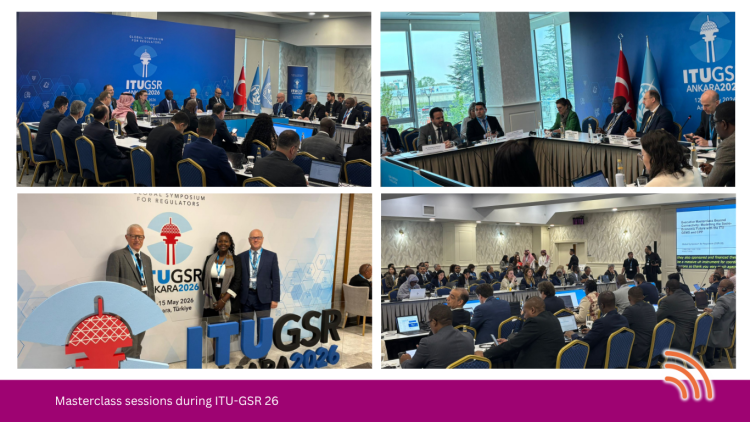
We are navigating an unprecedented pace of technological advancement, driven heavily by artificial intelligence, cloud infrastructure, and the Internet of Things. Director of the Telecommunication Development Bureau (BDT) at the International Telecommunication Union, Dr Cosmas Luckyson ZAVAZAVA, reflected that, “Leading generative AI applications reached 100 million users in just two months, marking the fastest technology adoption in history and bringing immense economic potential. Furthermore, broad industry estimates suggest AI could contribute $4.8 trillion to the global economy. Importantly, the backbone of AI is cloud infrastructure, and this is expanding by over 30% every year.” He further stated, “However, nearly one third of the global population is still offline, 2.2 billion people, which means we must act now to ensure the digital divide doesn't transform itself into an even greater AI divide.”
There is a need for real-time trusted information sharing on emerging risks from deepfake-driven fraud to algorithmic bias. We cannot navigate without data, nor can we bridge the digital divide without sustainable investment.
The GSR-26 chair, Mr. Ömer Abdullah Karagözoğlu, President of the Information and Communication Technologies Authority, Turkey, shared that the GSR-26 Best Practice Guidelines have been adopted, a report of shared insights from regulators, policymakers, the private sector, and other relevant stakeholders committed to making digital markets work in the public interest. This guideline outlines the essentials of regulatory governance for a fast-changing digital environment. These guidelines from GSR-26 provide a shared reference point for building regulatory institutions that can respond to technological change while keeping people, public interest and sustainable development at the centre.
Dr Cosmas Luckyson ZAVAZAVA also stated that, with this perspective in mind, navigation requires three things.
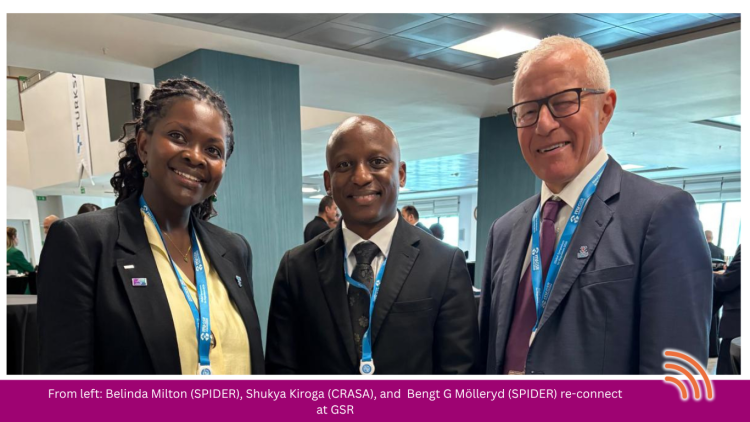
These guidelines reflect a collective experience, shared priorities, and common determination to develop more agile, inclusive, and forward-looking regulatory approaches for the digital age. The GSR-26 best practice guidelines will provide meaningful guidance to regulators and policymakers worldwide as we continue to navigate increasingly complex digital ecosystems together and adopt a collaborative, future-oriented approach.
Connectivity, innovation and digital opportunities should benefit all segments of society and contribute to economic and social development. Ömer Fatih Sayan, Deputy Minister of Transport and Infrastructure, while further expounding on the need for digital transformation as a priority, said, “We continue our preparation for next generation technologies such as 5G, 6G, AI satellite technologies and advanced digital infrastructure.”
Mr. Ömer Abdullah Karagözoğlu, Chairman of the Board and President of the Information and Communication Technologies Authority (BTK) of the Republic of Türkiye, said, “Digital Transformation is no longer a matter concerning a single institution alone, It is a shared global agenda that requires continued dialogue and cooperation among governments, regulators the private sector, international organizations, academia and civil society.” he added, “Now that technology evolves over months, there is an urgent need to close the speed gap. Here is our shared task as GSR-26. We are here not to stop the frontier; we are here to navigate it well."
The role of regulators extends far beyond traditional oversight. Regulators are now expected to create environments that support innovation and promote trust and stability. They must also encourage sustainable investment, strengthen resilience, and safeguard citizens' interests. This is essential in an increasingly complex digital landscape, one that demands technical capability, adaptability, collaboration, and a future-oriented mindset.
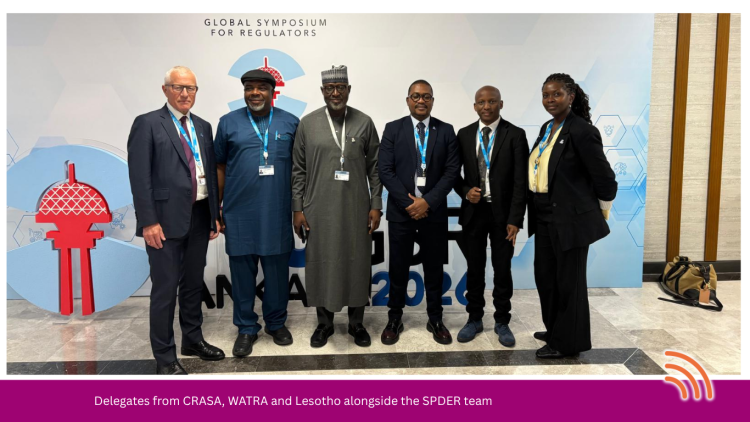
All discussions held during GSR 26, along with the best-practice guidelines from these processes, will contribute meaningfully to future international cooperation. They will also inform more forward-looking approaches to digital regulation worldwide. The dialogue, partnerships, and ideas developed here in Ankara will continue well beyond this symposium. They will help build a more inclusive, resilient, secure, and human-centred digital future for all.
Closing connectivity and usage gaps for meaningful digital participation
Collectively, discussions at GSR-26 reinforced that achieving meaningful digital transformation goes far beyond expanding connectivity. Delegates highlighted the urgent need to close persistent usage gaps through affordable access, digital literacy, relevant services, and inclusive infrastructure that enables full participation in the digital economy. The conversations also recognised that connectivity challenges differ across regions and communities, particularly in rural areas, making localised and context-specific approaches essential for sustainable progress.
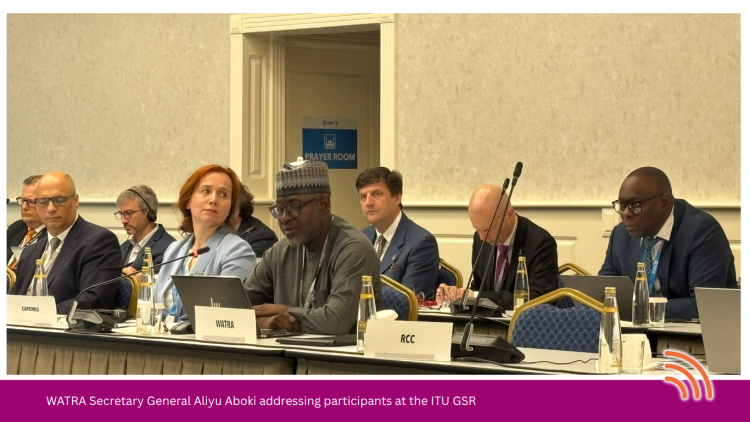
The summit further reaffirmed the growing importance of resilience, digital sovereignty, and secure infrastructure in shaping future digital ecosystems. As technologies continue to evolve rapidly, participants stressed the value of evidence-based policymaking, inclusive and gender-responsive strategies, and stronger international cooperation in advancing Universal and Meaningful Connectivity (UMC). Ultimately, GSR-26 underscored that navigating the digital frontier will require collective action, shared responsibility, and continued collaboration among governments, regulators, industry, and global stakeholders to build a more inclusive, secure, and resilient digital future for all.
iPRIS is coordinated and implemented by SPIDER in strategic and technical partnership with the Swedish Post and Telecom Authority (PTS) and Institut luxembourgeois de régulation (ILR), as well as ARTAC, CRASA, EACO, and WATRA.
iPRIS is funded by the European Union, Sweden, and Luxembourg as part of the Team Europe Initiative “D4D for Digital Economy and Society in Sub-Saharan Africa” (Code: 001).
Regional regulatory cooperation remains a cornerstone of Africa’s digital transformation agenda. The 15th Annual General Meeting (AGM) of the Communications Regulators’ Association of Southern Africa (CRASA), held in Lilongwe, Malawi, from 16 to 17 April 2026, brought together national regulatory authorities (NRAs), regional bodies, and partners to reflect on progress, address governance challenges, and explore the future of digital regulation across Southern Africa.
The AGM was preceded by a forward-looking summit focused on “G5 regulation”, a framework aimed at advancing next-generation, digitally responsive regulatory systems. Discussions emphasised the need for regulators to transition towards more adaptive, future-oriented models capable of supporting evolving digital ecosystems.
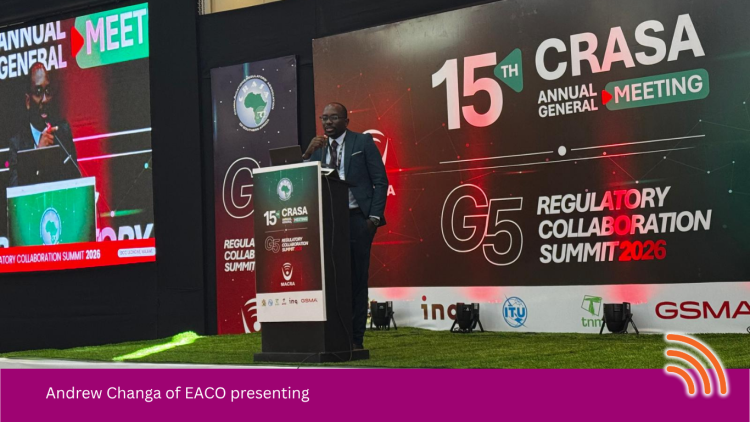
However, a key insight emerging from the discussions was the gap between current regulatory maturity and future ambitions. While the G5 framework points towards advanced digital regulation, many participating countries are still operating at earlier stages of regulatory development. This highlights a critical need for bridging strategies to ensure that regulatory evolution is both realistic and inclusive.
The AGM also provided a platform to strengthen collaboration between CRASA and other regional initiatives, including iPRIS. Engagements during the meeting highlighted growing interest in better coordination of capacity-building efforts and regulatory development programmes across regions.
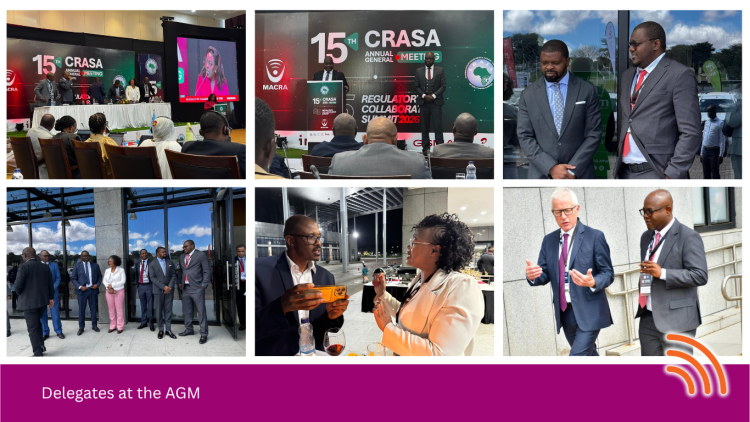
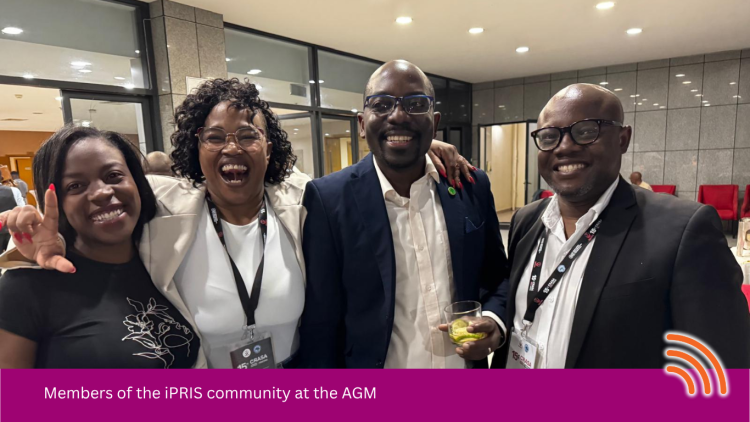
Notably, participation from iPRIS stakeholders and alumni demonstrated the programme’s increasing relevance within regional regulatory spaces. Alumni are beginning to take on more prominent roles within their institutions, contributing to discussions and shaping regulatory priorities at both national and regional levels.
Across multiple sessions, a recurring theme emerged: the need to translate dialogue into actionable outcomes. While the AGM facilitated rich discussions on policy, strategy, and cooperation, participants emphasised the importance of moving beyond conversations towards implementation.
This includes:
The CRASA 15th AGM reaffirmed the importance of regional platforms in shaping Africa’s digital future. It highlighted both progress and persistent challenges, from advancing regulatory frameworks to strengthening institutional governance.
For iPRIS and its partners, the AGM reinforces a clear direction:
iPRIS is coordinated and implemented by SPIDER in strategic and technical partnership with the Swedish Post and Telecom Authority (PTS) and Institut luxembourgeois de régulation (ILR), as well as ARTAC, CRASA, EACO, and WATRA.
iPRIS is funded by the European Union, Sweden, and Luxembourg as part of the Team Europe Initiative “D4D for Digital Economy and Society in Sub-Saharan Africa” (Code: 001).
Namibia has taken a decisive step towards strengthening its national cybersecurity posture with the launch of its National Cybersecurity Incident Management Guidelines (2026), a milestone that reflects both national urgency and the tangible impact of African regulatory collaboration under iPRIS.
This achievement traces back to the fourth iPRIS cohort, where Namibia’s delegation identified critical cybersecurity gaps and committed to addressing them through a Change Initiative that has now moved from concept to implementation. This fourth cohort was an all-female delegation, consisting of Ella-Betty Chapoto, Mirjam Mungungu, Magano Katoole, and Charley Cloete.
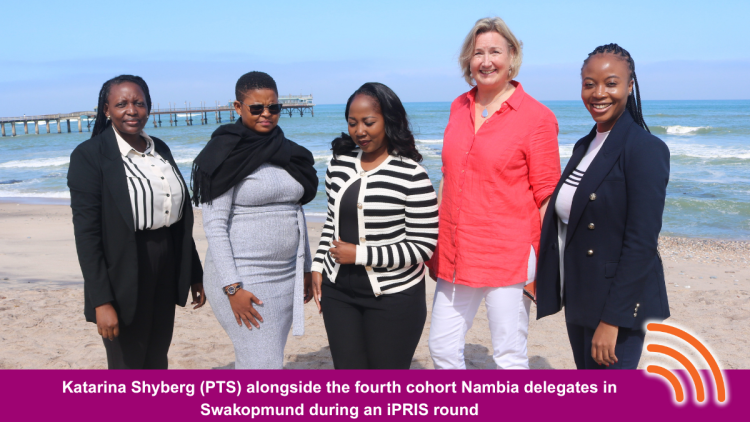
Read more about the fourth cohort’s discussions after their full iPRIS cycle here
During their first engagement in Sweden, the Namibia team, now iPRIS alumni, highlighted a rapidly evolving threat landscape.
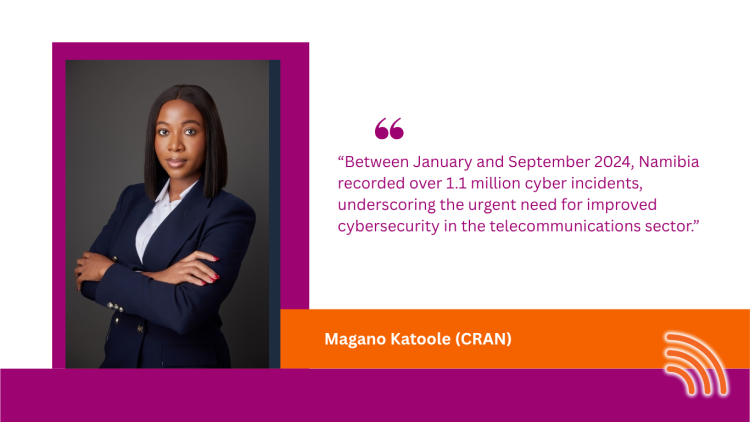
The scale of these incidents pointed to a structural gap: while digital adoption was accelerating, coordinated national mechanisms for managing cyber incidents remained underdeveloped. In response, the team advanced a Change Initiative focused on strengthening incident response frameworks, laying the foundation for what would become the national guidelines.
The launch of the guidelines marks a shift from reactive responses to a coordinated, risk-based national cybersecurity approach. Developed by the Communications Regulatory Authority of Namibia (CRAN) in collaboration with the Namibia Cybersecurity Incident Response Team (NAM-CSIRT), the guidelines provide:
Importantly, the guidelines emphasise that cybersecurity is not a standalone technical function, but a shared responsibility across institutions and individuals. As highlighted during the launch:
Cyber threats are not hypothetical; they are real, evolving, and require continuous preparedness, coordination, and learning.
In the absence of a fully enacted cybersecurity law, the guidelines serve as a critical operational bridge, enabling institutions to act now rather than wait for legislation. They introduce practical mechanisms such as:
The launch also reinforced the urgency of action with concrete national data and examples:
To translate policy into practice, the event included live simulations demonstrating real-world threats such as:
These examples underscored a central message: cybersecurity resilience depends on preparedness, awareness, and rapid response, not prevention alone.
The guidelines also position Namibia within a broader ecosystem of regional and international collaboration.
They align with and leverage cooperation through platforms such as:
This reflects a core iPRIS principle: cross-border collaboration is essential, as cyber threats do not respect national boundaries.
The Namibia case demonstrates how iPRIS moves beyond knowledge exchange to institutional transformation.
What began as a cohort discussion in Stockholm and Swakopmund has resulted in:
The initiative highlights the value of peer learning and structured change processes in enabling regulators to respond to complex, fast-evolving challenges. While the guidelines mark significant progress, they are designed as a living framework, continuously evolving alongside emerging threats, technologies, and national priorities.
With ongoing efforts to advance cybersecurity legislation, expand capacity building, and strengthen coordination, Namibia is positioning itself for a more secure and resilient digital future. As the iPRIS journey continues, this milestone stands as a clear example of what is possible when insight, collaboration, and implementation come together.
Watch highlights from the fourth iPRIS cohort below
iPRIS is coordinated and implemented by SPIDER in strategic and technical partnership with the Swedish Post and Telecom Authority (PTS) and Institut luxembourgeois de régulation (ILR), as well as ARTAC, CRASA, EACO, and WATRA.
iPRIS is funded by the European Union, Sweden, and Luxembourg as part of the Team Europe Initiative “D4D for Digital Economy and Society in Sub-Saharan Africa” (Code: 001).
Regional cooperation on roaming is moving from ambition to implementation, with West African regulators actively shaping practical, context-driven frameworks for more affordable and transparent cross-border connectivity.
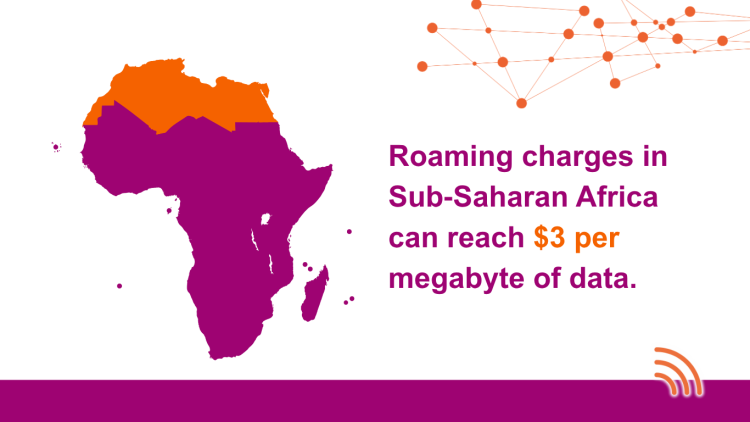
Today, the majority of citizens rely on mobile connectivity not only for communication but also for banking, media consumption, commerce, and access to public services. Yet the cost of using a phone outside one’s home country remains prohibitively high. International Telecommunication Union (ITU) reports indicate that roaming charges in Sub‑Saharan Africa can reach $3 per megabyte of data, a price that places everyday digital activities beyond the reach of many households. Affordable roaming is therefore more than a convenience; it is a foundation for regional integration, enabling people and businesses to stay connected, lowering trade barriers, and supporting the growth of a unified digital economy across the West African region. As of August 2025, 13 bilateral MOUs had been signed across 8 West Africa Telecommunications Regulators Assembly (WATRA) member states, with 9 already active (WATRA, 2025).
Read more insights concerning roaming in Sub-Saharan Africa from SPIDER Director Prof Caroline Wamala-Larsson here
At the 2026 Annual General Meeting of the West Africa Telecommunications Regulators Assembly (WATRA) in Lomé, Togo, regulators from across West Africa convened to address one of the region’s most persistent challenges: the high cost and complexity of mobile roaming. Held from April 20 to 24, 2026, the AGM convened national regulatory authorities (NRAs), field stakeholders, and development partners to advance the telecom landscape in the region.
The capacity-building workshop on roaming brought together NRAs to examine viable regulatory models, informed by international experience but grounded in regional realities. This workshop follows a recent online roaming workshop convened by WATRA, in partnership with the iPRIS project, organised by EY Baltic, and coordinated by SPIDER, on 19th February.
The workshop focused on translating global roaming frameworks into actionable pathways for West Africa. Experts from EY Baltic, including Paulius Žostautas, Olga Nodarou, Ioanna Choudalaki, and Andrejs Dombrovskis, presented regulatory approaches shaped by European and other international experiences. A central insight emerged clearly: there is no single model for roaming regulation. Instead, regulators must balance three critical dimensions:
Discussions explored different regulatory approaches, including benchmarking, cost-based models, and phased harmonisation strategies. Importantly, regulators examined how these models could evolve progressively, starting with simpler price caps and moving towards more advanced, cost-informed frameworks.
Across the sessions, West African regulators emphasised a key concern: global models must be adapted to regional and local market realities.
For example, discussions highlighted the limitations of “roam-like-at-local” approaches, which can introduce pricing complexity and reduce transparency for consumers. In contrast, more harmonised models, such as simplified price caps, were recognised as more user-friendly and predictable.
At the same time, regulators raised valid implementation challenges:
In response, the experts outlined practical alternatives, including benchmarking against comparable markets to reduce implementation burden while still moving towards harmonisation.
A recurring theme was the role of transparency in enabling effective regulation. Cost modelling, while complex, was presented as a tool to:
Equally, transparency for consumers, through clear pricing and communication, was identified as essential to improving user experience and adoption of roaming services.
Beyond pricing, the workshop addressed the broader technical and regulatory ecosystem required for a functional regional roaming framework. This included:
A key takeaway was that regional roaming is not only a pricing issue, but a system-wide coordination challenge, requiring alignment between regulators, operators, and policymakers.
The workshop demonstrated the value of iPRIS as a platform for peer exchange, where African regulators are not passive recipients of global models but active contributors shaping solutions for their context. As noted by Bengt G. Mölleryd, the strength of the session lay in its interactivity and relevance, connecting international expertise with the lived realities of West African markets.
Hosted with the support of ARCEP Togo, the convening also underscored the importance of national leadership in advancing regional agendas. The Lomé discussions signal a growing momentum towards a more integrated West African roaming space. The path forward is iterative, requiring:
For iPRIS, this engagement reinforces a core objective: supporting African regulators to lead, design, and implement reforms that improve connectivity outcomes across the continent.
iPRIS is coordinated and implemented by SPIDER in strategic and technical partnership with the Swedish Post and Telecom Authority (PTS) and Institut luxembourgeois de régulation (ILR), as well as ARTAC, CRASA, EACO, and WATRA.
iPRIS is funded by the European Union, Sweden, and Luxembourg as part of the Team Europe Initiative “D4D for Digital Economy and Society in Sub-Saharan Africa” (Code: 001).
From 13 April to 29th April, iPRIS hosted its 8th cohort in Stockholm, Sweden, for a two-and-a-half-week comprehensive peer-to-peer learning program. The knowledge-exchange sessions, which are part of the iPRIS cycle, brought together National Regulators (NRAs), Regional Regulators (RROs), implementing partners, including the Swedish Post and Telecom Authority (PTS) and the Swedish Program for ICT in Developing Regions (SPIDER), and European partners. They all convened to advance and strengthen the Change Initiatives(CIs) of the African National Regulatory Authorities. The cycle covered key areas of institutional strengthening, capacity building, regulatory collaboration, and knowledge exchange to strengthen regulatory capacity and drive inclusive digital transformation in Sub-Saharan Africa. The eighth cohort included NRAs from Liberia Telecommunications Authority(LTA), Information and Communications Technologies Authority (ICTA), Communications Regulatory Authority of Namibia (CRAN), National Communications Authority (NatCA), Tanzania Communications Regulatory Authority (TCRA), and Postal & Telecommunications Regulatory Authority of Zimbabwe (POTRAZ). RRO representatives from WATRA, EACO and CRASA also joined the NRAs to help advance their CIs and contribute to regional cooperation. The success of the first cycle of the eighth iPRIS cohort marks a key step in shaping a connected, inclusive, and digitally empowered future.
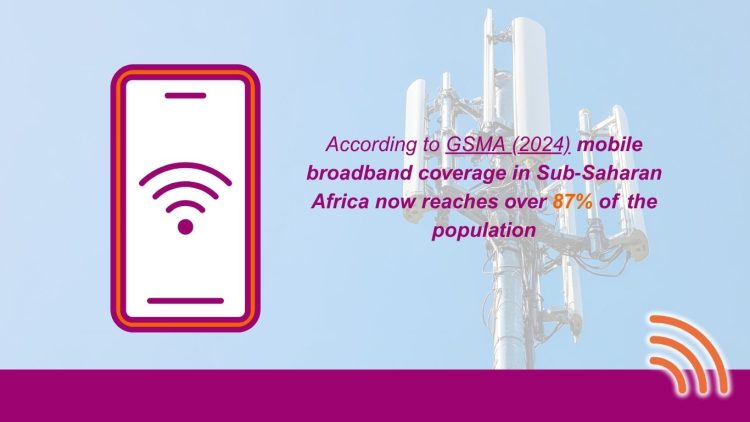
According to GSMA (2024), mobile broadband coverage in Sub‑Saharan Africa now reaches over 87% of the population. However, significant gaps remain, as another GSMA (2024) report highlights that Sub-Saharan Africa remains the region with the lowest connectivity levels and the most extensive coverage and usage gaps, with 27% connected, a coverage gap of 13%, and a usage gap of 60%. These two reports highlight that, despite growth in mobile broadband coverage, usage gaps persist within network coverage, while the digital divide continues to affect rural and underserved communities. While mobile broadband networks have expanded significantly across Sub-Saharan Africa, the greater challenge now lies in converting coverage into meaningful usage. The eighth iPRIS cohort training aimed to address this challenge by strengthening the NRAs’ capacity through sessions including spectrum management, cybersecurity, regulatory frameworks, and Diversity, Equity, and Inclusion.
Week One of the program focused on grounding participants in their CIs, strengthening regulatory capacity, and enhancing peer learning among NRAs. The week supported practical implementation through exposure to project management, DEI frameworks and international regulatory practices. The CIs, being the cornerstone of the iPRIS program, were the main focus of the first day of the round, with each NRA presenting on their area of policy development and implementation within the ICT sector. The CIs included quality of service, Digital inclusion for people with disabilities, Cybersecurity, Market regulation, and Spectrum management. Through peer reviews and expert input from PTS and SPIDER, each NRA strengthened its core focus, identified gaps and challenges, and clarified its scope. The participants focused on designing initiatives rooted in clear needs, practical solutions, and measurable impact.
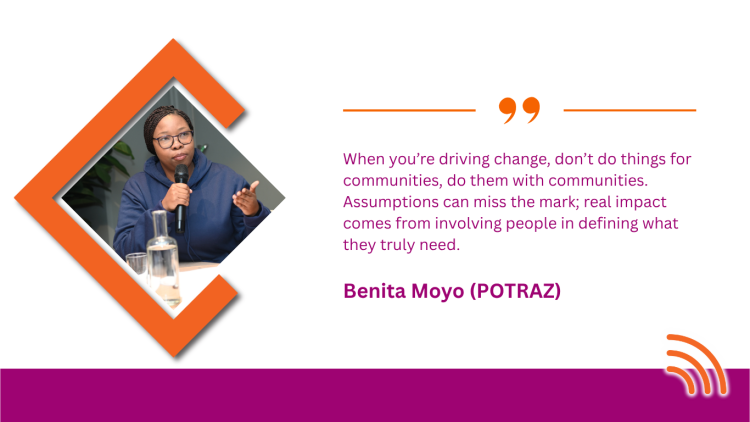
As highlighted in the discussions on institutional strengthening under iPRIS,
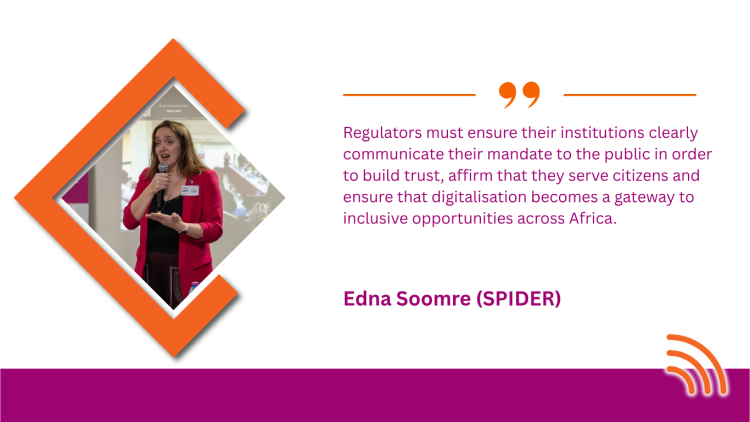
Telecom experts from SPIDER and PTS reinforced participants' regulatory capacity by sharing institutional best practices, policy frameworks, and practical implementation tools. Malena Liendholm Ndounou (SPIDER) equipped the participants with the project management plan, a tool to help ensure the effective execution of these projects so they not only meet their objectives but also advance digital inclusivity in Sub-Saharan Africa.
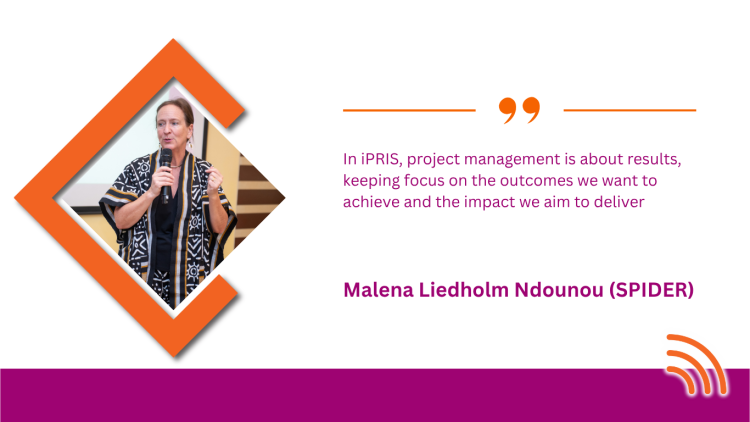
Building on that, she introduced a structured seven-stage project cycle that guides participants through problem identification, objective setting, outcome definition, indicator selection, resource planning, stakeholder mapping, implementation, and Monitoring, Evaluation, Accountability and Learning (MEAL). A key factor noted during this presentation was the need to incorporate Diversity, Equity and Inclusion (DEI) throughout the implementation stages of a project.
Per Andersson, Antonia Wopenka, Jesper Svedberg, Per-Erik Vitasp and Gustav Söderlind, telecom experts from PTS, led JEO institutional and technical knowledge exchange sessions, which provided exposure to European regulatory frameworks, digital governance models, cybersecurity practices, and inclusive digital development approaches. The JEO sessions highlighted that while technology has advanced toward a more integrated, user-friendly digital ecosystem, there has been an increase in cybersecurity threats, fraud, and digital exclusion. The PTS experts highlighted the regulatory frameworks put in place to build resilience and curb these risks. This was one of the key takeaways that the NRAs could also apply in their authorities in similar cases.
The first week with the cohort strengthened their CIs with a strong analytical basis and gave them a clear picture of how regulatory frameworks can enable equitable digital markets.
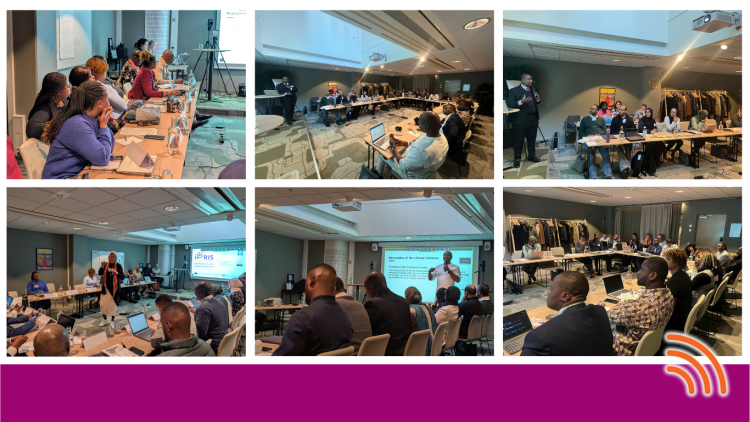
Read more about week 1 sessions here
In the second week, the sessions shifted from systems thinking and institutional frameworks to practical discussions on harmonisation, broadband mapping, spectrum management, project evaluation, and regional collaboration. Led by experts from PTS and SPIDER, participants engaged in discussions on end-user protection and DEI. Lisa Gurner of PTS walked the cohort through frameworks and initiatives by the European authority responsible for protecting end users, including the European Electronic Communications Code (EECC).
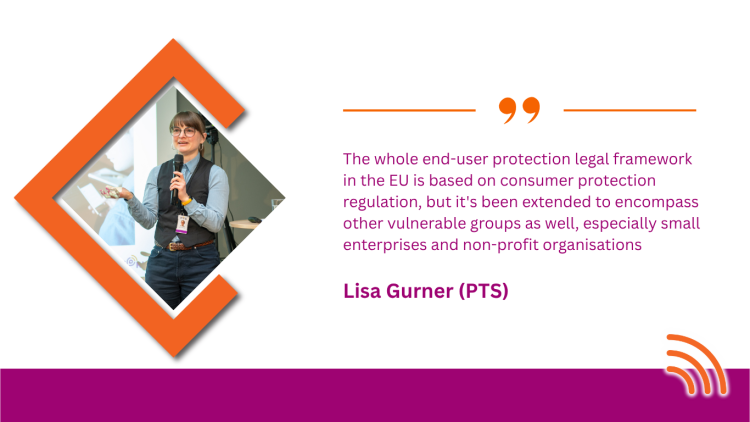
A key thread throughout the discussions was that regulation must go beyond market structure and explicitly address vulnerability, institutional bias, and digital exclusion. Emphasising the responsibility of regulators, Caroline Wamala Larsson of SPIDER noted that:
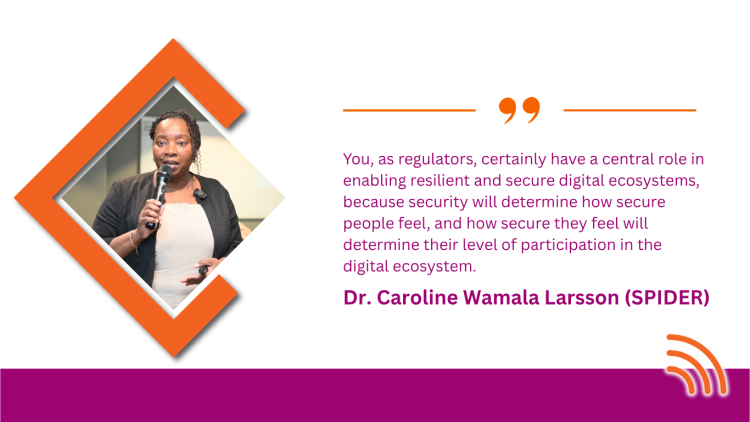
As participants refined their CIs, they were challenged to rethink inclusion not as a policy add-on, but as a core regulatory outcome that must be embedded from the first stage through structured planning and implementation.
The week transitioned into real-world application through industry and technical exposure. The Ericsson field visit gave participants insight into how connectivity solutions are developed in practice, highlighting the private sector’s role in driving innovation and the importance of regulatory responsiveness to emerging technologies. This was followed by intensive JEO sessions led by Bo Andersson, Andreas Wigren, Jens Ingman, Amela Hatibovic Sehic, Gustav Lenninger and Fredrik Johansson. The sessions focused on broadband deployment, broadband mapping, and spectrum management, where Sweden’s data-driven regulatory model illustrated how granular information improves decision-making, accountability, and coverage analysis. Highlighting the broader developmental impact of such data-driven approaches, Jens Ingman, Senior Analyst, PTS, noted that:
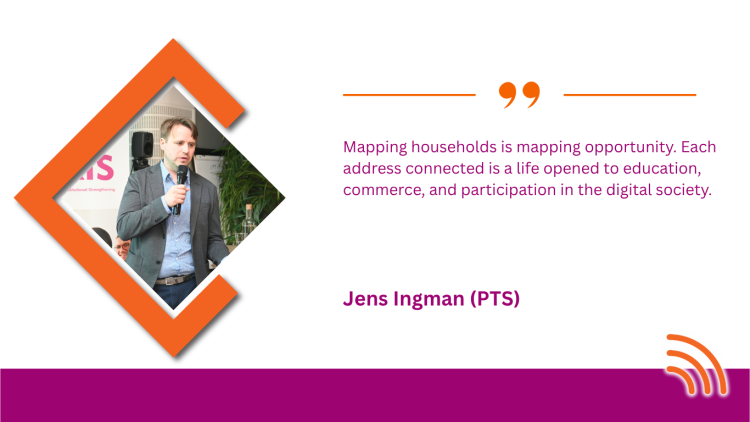
Regional harmonisation discussions further reinforced the importance of coordinated regulatory approaches across countries. By the end of week two, participants had shifted their understanding of regulation toward effective oversight that depends on collaboration between regulators, industry, and robust data systems to ensure meaningful and equitable access to digital services.
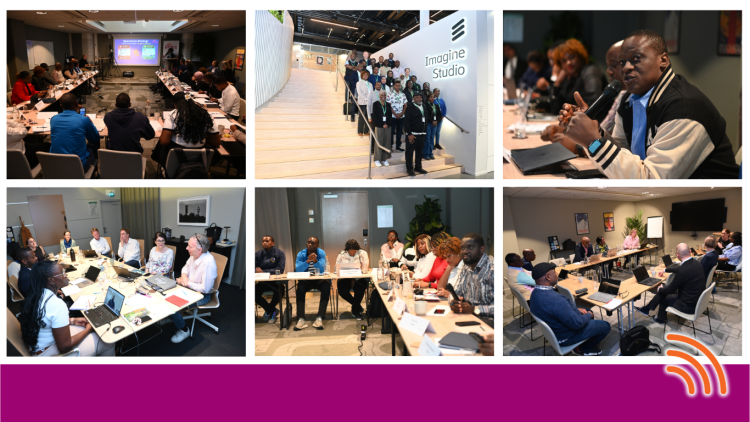
Read more about week 2 here
The third week marked a key milestone in the first cycle of the program, as participants consolidated the regulatory knowledge, tools, and approaches gained over the previous weeks and translated them into forward-looking implementation plans. Following sessions on project management, DEI, intersectionality, JEO and telecom regulation, the National Regulatory Authorities (NRAs) entered the final round of Change Initiative discussions with experts from SPIDER and PTS. Representatives from the RROs also contributed through knowledge exchange and regional perspectives, reinforcing the value of cooperation across regions. These discussions helped participants refine objectives, clarify outputs and outcomes, and assess the feasibility of implementation.
Henrik Höglin introduced the participants to Kivra, a digital mailbox for receiving important documents, such as invoices, salary slips, yearly bank statements, and credit checks, from companies, banks, and authorities. Kivra focuses on environmental sustainability, as more users mean fewer paper letters and more digital communication, resulting in less waste. The session added practical insight into user-centred digital service delivery and regulatory adaptability.
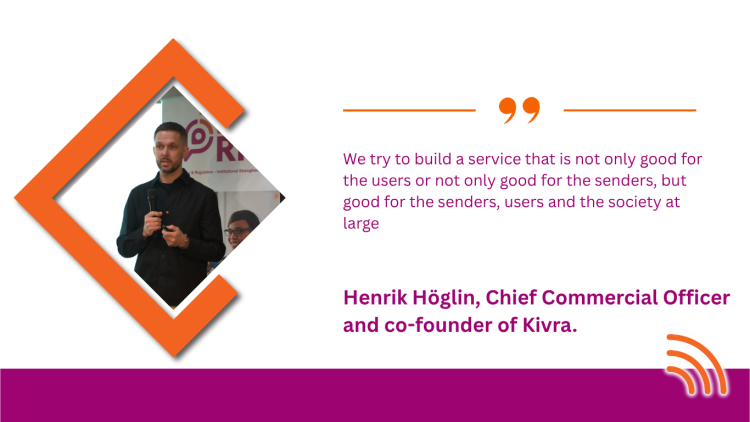
The Way Forward presentations were the central focus of the week, with each NRA outlining how its CI would progress beyond the training phase into practical regulatory action. The presentations underscored that effective regulation requires clear, measurable, and sustainable implementation plans supported by accountability and institutional ownership. The day focused on reflection, consolidation, and closure, as participants presented their refined project plans and demonstrated progress from initial concepts to structured interventions.
The first cycle concluded with evaluations, closing remarks, and certificate presentations, marking the transition from peer learning to implementation. In line with the iPRIS objective, Week Three equipped regulators with actionable, context-responsive tools to advance digital transformation in their respective countries.
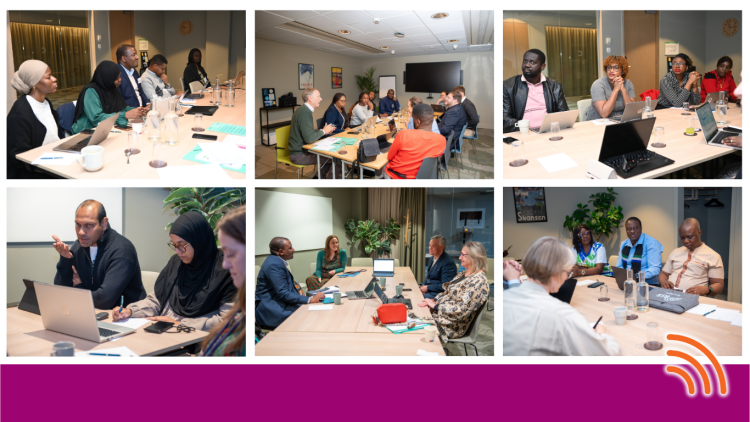
Over the two and a half weeks, the 8th iPRIS Cohort progressed from foundational regulatory learning to the structured development and refinement of Change Initiatives, culminating in clear implementation plans through the Way Forward presentations. The programme advanced regulatory dialogue and peer learning among African National Regulatory Authorities, with support from European partners and implementing partners, including SPIDER and PTS. Throughout the sessions, participants moved from conceptual understanding to practical regulatory application, with continued emphasis on inclusion, meaningful project management, and effective implementation.
This first round of the iPRIS cycle reinforced a shared commitment to resilient, inclusive, and future-ready digital ecosystems across Sub-Saharan Africa.
With their Way Forward plans in place, participants conclude the Stockholm phase with clearer regulatory roadmaps, enhanced institutional perspectives, and more developed Change Initiatives. The cohort now proceeds to the next stage of the iPRIS program, prepared to translate knowledge into action through regulatory reform, improved institutional performance, and contributions to Africa’s broader digital transformation agenda. They will convene again in six months in Nairobi, Kenya, to review their progress.
iPRIS is coordinated and implemented by SPIDER in strategic and technical partnership with the Swedish Post and Telecom Authority (PTS) and Institut luxembourgeois de régulation (ILR), as well as ARTAC, CRASA, EACO, and WATRA.
iPRIS is funded by the European Union, Sweden, and Luxembourg as part of the Team Europe Initiative “D4D for Digital Economy and Society in Sub-Saharan Africa” (Code: 001).
Week Two of the 8th iPRIS Cohort in Stockholm, Sweden, was successfully completed from 20 - 24 April. Telecom experts from Liberia Telecommunications Authority(LTA), Information and Communications Technologies Authority (ICTA), Communications Regulatory Authority of Namibia (CRAN), National Communications Authority (NatCA), Tanzania Communications Regulatory Authority (TCRA), Postal & Telecommunications Regulatory Authority of Zimbabwe (POTRAZ), advanced from foundational concepts into applied strategies for inclusive digital transformation. The sessions built on Week One’s systems thinking and institutional frameworks, moving into practical discussions on harmonisation, broadband mapping, spectrum management, project evaluation, and regional collaboration.
According to GSMA (2024) mobile broadband coverage in Sub‑Saharan Africa now reaches over 87% of the population, showing remarkable progress in infrastructure expansion across the region, reflecting significant progress in infrastructure expansion. The challenge ahead lies in translating this coverage into affordable access and meaningful usage, a task that requires strong regulatory capacity and innovative policy design.
Throughout the week, experts from iPRIS implementing partners, including the Swedish Program for ICT in Developing Regions (SPIDER) and the Swedish Post and Telecom Authority (PTS), guided participants through interactive exchanges and case studies. Highlights included:
By weaving together technical detail, regional experience, and practical project design, Week Two reinforced that effective regulation is not only about frameworks and policies but also about execution, accountability, and collaboration across sectors.
Lisa Gurner of PTS walked the cohort through the European Electronic Communications Code (EECC), explaining how its scope has expanded beyond traditional consumer protection. Vulnerable groups such as small enterprises, non‑profits, and citizens with limited digital literacy are now explicitly considered. This shift reflects a recognition that digital inclusion is not just about access, but about ensuring fairness and safety for those least able to navigate complex markets. She emphasised that regulation must evolve with society’s needs.
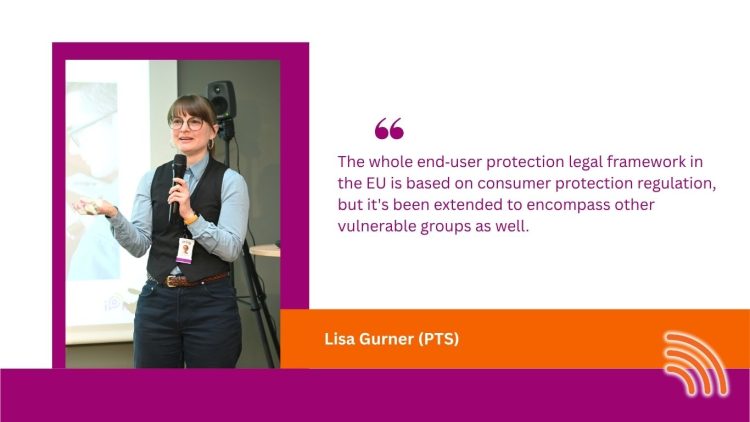
Her framing encouraged participants to think about their own national contexts: who is left behind, and how can regulators extend protection without stifling innovation?
In the afternoon, the conversation then moved to diversity, equity, and inclusion (DEI), led by Caroline Wamala and Malena Liendholm Ndounou of SPIDER. They challenged regulators to look inward, stressing that institutional culture shapes external outcomes.
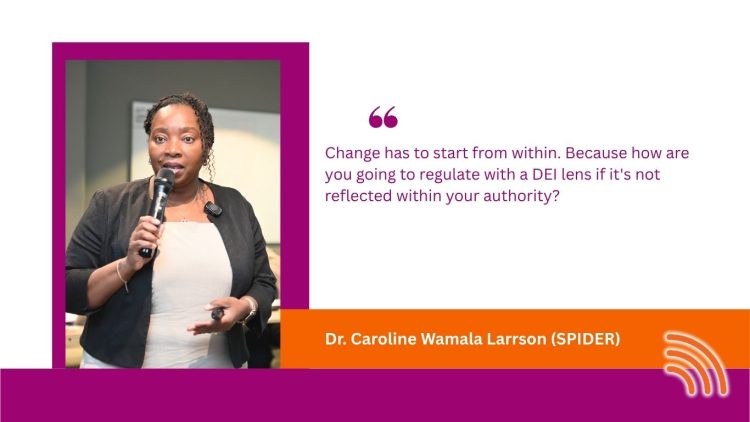
This provocation sparked candid reflections. Participants discussed how unconscious bias within regulatory bodies can filter into policy decisions, whether in licensing, consumer protection, or enforcement. The facilitators illustrated this with global examples such as Estonia’s secure digital ID system, which empowers elderly citizens to access services confidently, and Kenya’s cybersecurity frameworks, which build trust among users who might otherwise be excluded.

On the second day, the emphasis shifted from external frameworks to refining each NRA’s Change Initiative. Country teams sat down with European experts to discuss their ideas relating them to the practical realities and received targeted feedback on design, scope, and feasibility. These discussions helped participants sharpen their project logic and identify where adjustments were needed. The dialogue was constructive, with experts encouraging teams to embed lessons from the previous sessions.
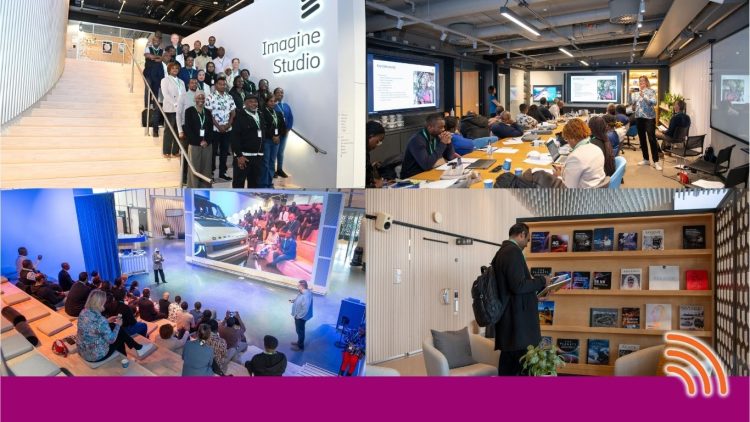
On the third day, the cohort stepped out of the seminar room and into industry practice with a field visit to Ericsson. The experience offered a first‑hand look at how private‑sector actors approach connectivity, resilience, and innovation. Participants were introduced to demonstrations of emerging technologies, from next‑generation mobile networks to solutions designed to strengthen reliability in underserved areas. The visit emphasised the interplay between regulation and market development.
Day four marked a turning point in the program, as the cohort moved into the week's most technical discussions. Moderated by Katerina Schyberg, the sessions combined European regulatory experience with African perspectives, showing how harmonisation, broadband mapping, and spectrum management are not abstract policy debates but practical tools for expanding opportunity and building trust in digital systems.
Bo Andersson from PTS emphasised the need for EU harmonisation, stating that fragmented implementation hinders innovation and imposes burdens on regulators.
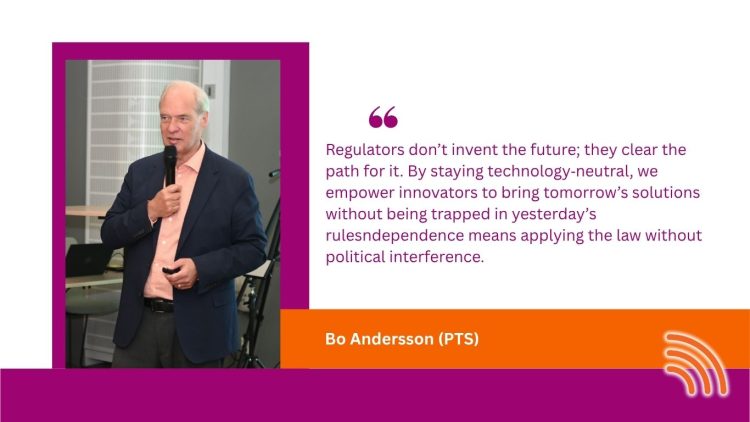
The proposed Digital Networks Act was discussed as a way to centralise regulation, though concerns about clarity and national sovereignty in spectrum authorisation remained. African regulators highlighted their challenge of being “technology receivers” and stressed the importance of participating actively in global standard‑setting to protect consumers.
The discussion then shifted to broadband mapping, where Sweden’s model was presented by Andreas Wigren and Jens Ingman. They explained that PTS collects granular address‑level data from hundreds of operators, enabling precise measurement of coverage and progress toward national targets. They urged regulators to think beyond national silos and adopt frameworks that allow technology to evolve freely.
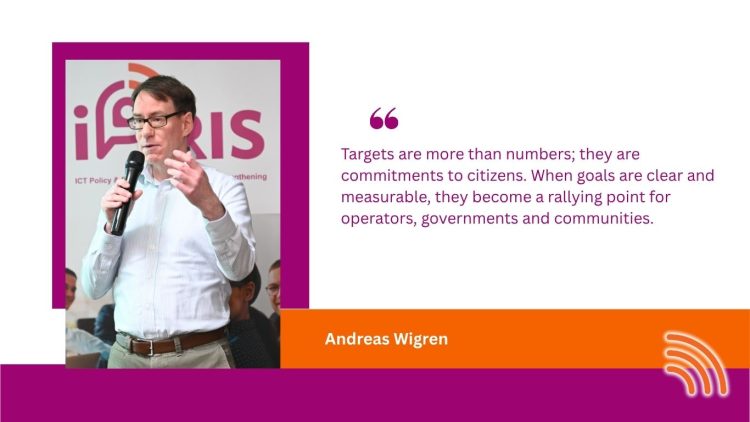
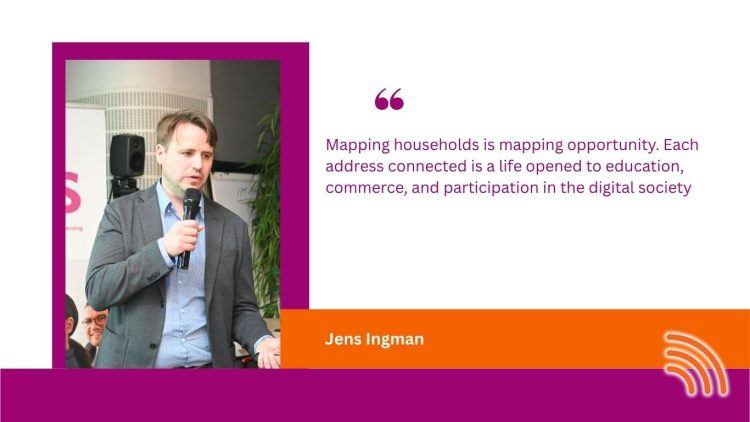
Participants compared their own practices, noting gaps in usage data and the need for more detailed household‑level information.
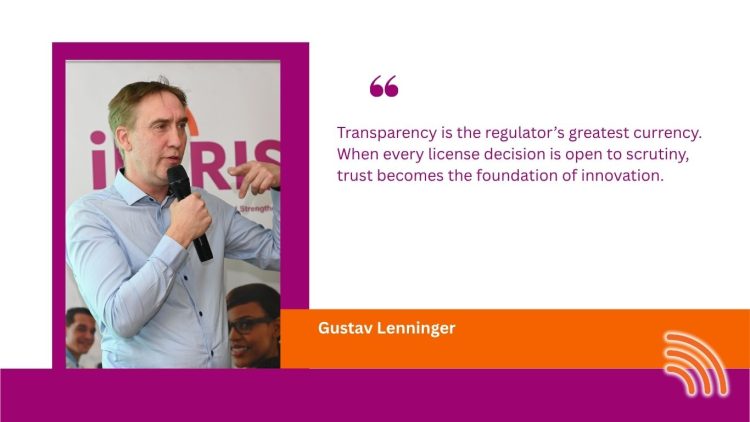
The day concluded with a spectrum management session led by Amela Hatibovic Sehic, Gustav Lenninger, and Fredrik Johansson. They outlined Sweden’s framework for licensing, supervision, and auctions, emphasising strategies such as international harmonisation, spectrum planning, rights of use, and sharing.
Amela Hatibovic Sehic underscored the principle that “spectrum must be allocated to maximise benefit for society, not just profit for the treasury.”
Gustav Lenninger reinforced the importance of transparency, noting that openness in licensing decisions builds trust and encourages innovation.
Examples of refarming, such as reallocating the 700 MHz band from television to mobile, illustrated how regulators adapt to evolving needs. Auctions were described not as revenue‑generating exercises but as mechanisms to promote competition, coverage, and innovation.
Day five brought together regional perspectives, project evaluation, and private‑sector insights. The morning opened with a session led by Malena Liedholm, who introduced the MEAL framework (Monitoring, Evaluation, Accountability, and Learning) as a practical tool for refining Change Initiatives. She guided participants to see evaluation not as a static report but as a continuous learning process that strengthens impact.
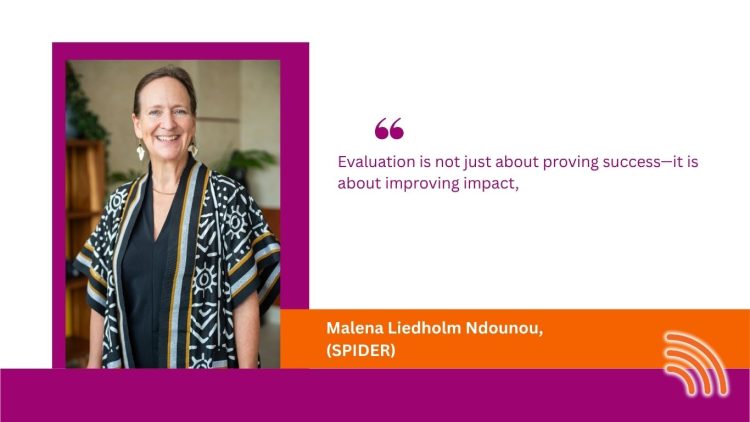
With this basis, the NRAs applied the MEAL lens to their project plans, clarifying outputs, outcomes, and impacts while testing assumptions and embedding accountability structures.
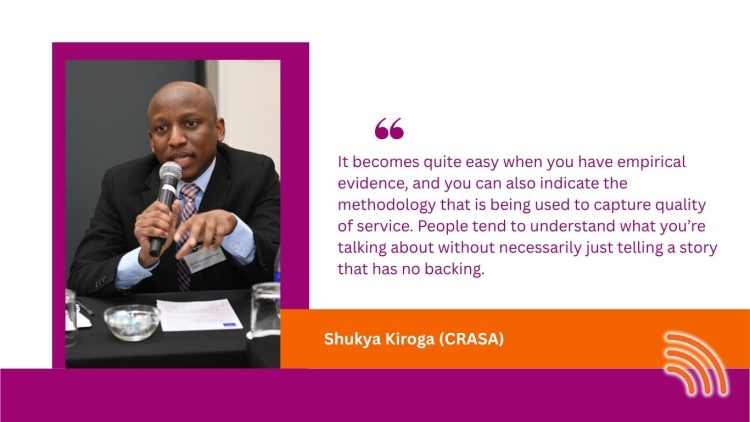
Building on this foundation, representatives from the Regional Regulatory Organisations (RROs), CRASA, WATRA, and EACO shared lessons from harmonisation projects. These included CRASA’s work on postal quality of service frameworks, WATRA’s efforts to establish roaming agreements across West Africa, and EACO’s initiative to build an ICT data bank for the East African region. By sharing harmonisation projects, CRASA demonstrated that collective approaches not only strengthen service quality but also give regulators the tools to engage stakeholders with credibility. Together, these examples showed how regional collaboration strengthens national capacity and provides tested models for evidence‑based decision‑making.
The day closed with a brief visit to Ernst & Young (EY), offering a private‑sector perspective on governance and accountability.
Week 2 highlighted that effective regulation is built on evidence, accountability, and collaboration through frameworks such as MEAL, regional harmonisation projects, and private‑sector perspectives on governance. The cohort’s progress shows that regulators are not only absorbing concepts but actively applying them to their own initiatives.
Collaboration emerged as a central theme, reminding participants that regional progress depends on collective responsibility.
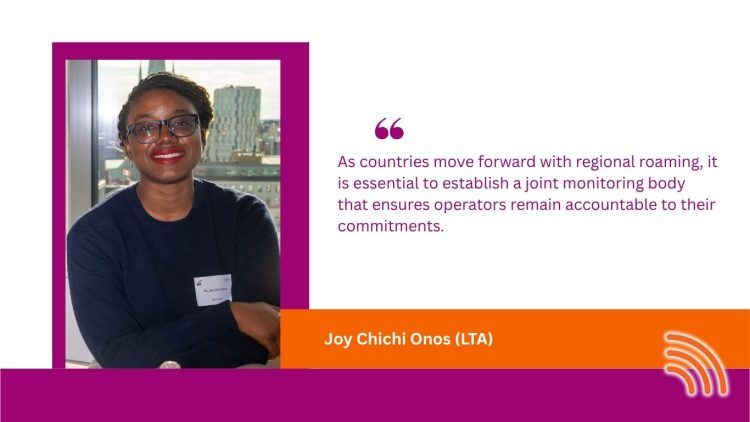
This forward‑looking perspective highlights the urgency of translating frameworks into enforceable action. Building on this momentum, Week 3 will be dedicated to intensive work on the NRA change initiatives and the Way Forward session. These sessions will not only refine Change Initiatives but will also mark the end of the first phase of the iPRIS cycle for the 8th cohort.
iPRIS is coordinated and implemented by SPIDER in strategic and technical partnership with the Swedish Post and Telecom Authority (PTS) and Institut luxembourgeois de régulation (ILR), as well as ARTAC, CRASA, EACO, and WATRA.
iPRIS is funded by the European Union, Sweden, and Luxembourg as part of the Team Europe Initiative “D4D for Digital Economy and Society in Sub-Saharan Africa” (Code: 001).
Last week marked the end of Week One of the 8th iPRIS Cohort peer-to-peer learning programme in Stockholm, Sweden. Telecom experts from Liberia Telecommunications Authority(LTA), Information and Communications Technologies Authority (ICTA), Communications Regulatory Authority of Namibia (CRAN), National Communications Authority (NatCA), Tanzania Communications Regulatory Authority (TCRA), Postal & Telecommunications Regulatory Authority of Zimbabwe (POTRAZ), convened to strengthen their regulatory capacity and advance digital transformation across Sub-Saharan Africa.
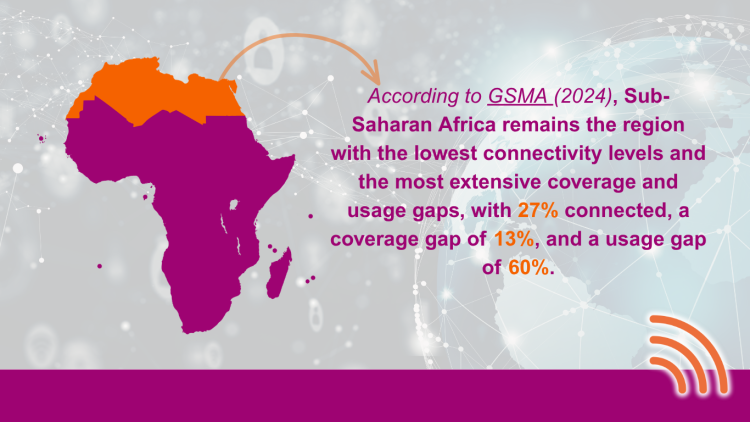
According to GSMA (2024), Sub-Saharan Africa remains the region with the lowest connectivity levels and the most extensive coverage and usage gaps, with 27% connected, a coverage gap of 13%, and a usage gap of 60%. This report highlights the need for African telecom experts to strengthen their regulatory capacity so as to bridge these gaps and advance inclusive digital connectivity.
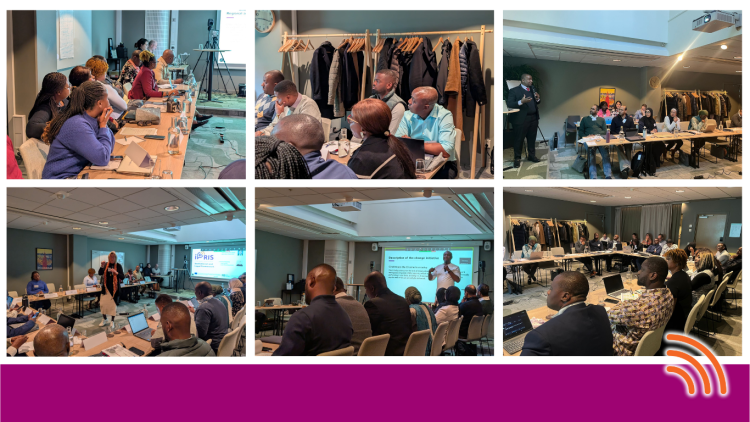
Throughout the week, participants engaged in interactive discussion sessions led by experts from iPRIS implementing partners, including the Swedish Program for ICT in Developing Regions SPIDER and the Swedish Post and Telecom Authority (PTS). Progressively, the sessions transitioned from foundational concepts in systems thinking and regulation to more applied discussions on institutional frameworks and the practical design of Change Initiatives (CIs).
The first day of the programme focused on grounding participants in their Change Initiatives and an afternoon project management session to strengthen and enable effective regulatory change.
Each National Regulatory Authority introduced its change initiatives, including quality of service, Digital inclusion for people with disabilities, Cybersecurity, Market regulation, and Spectrum management. In detail, the NRAs outlined their core focus, gaps, challenges, and scope, and received feedback from not only telecom experts from PTS and SPIDER but also fellow NRAs. This peer exchange reinforced one of the core strengths of iPRIS collaborative regulatory learning across regions. Key frameworks such as Monitoring, Evaluation, Accountability and Learning (MEAL) and Diversity, Equity and Inclusion (DEI) were mentioned, highlighting iPRIS's commitment to digital inclusivity.
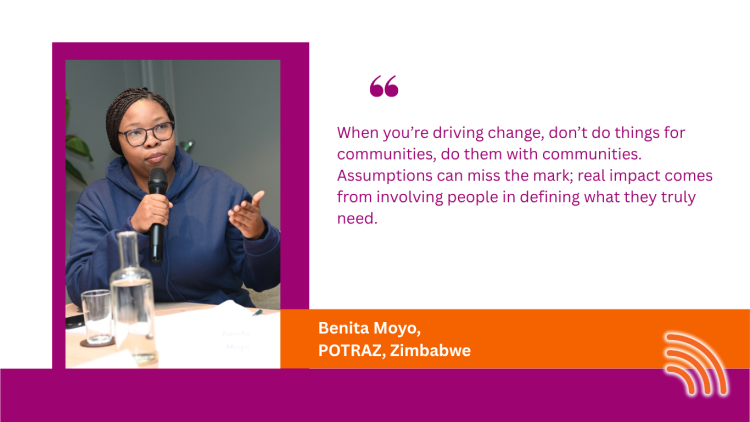
Building on the CIs' presentations, Malena Liendholm Ndounou (SPIDER) led the participants through a project management session, shifting the focus to practical implementation. The session introduced key tools, including a project management plan, which will help them ensure effective execution of these projects so they not only meet their objectives but also advance digital inclusivity in Sub-Saharan Africa. As Malena emphasised:
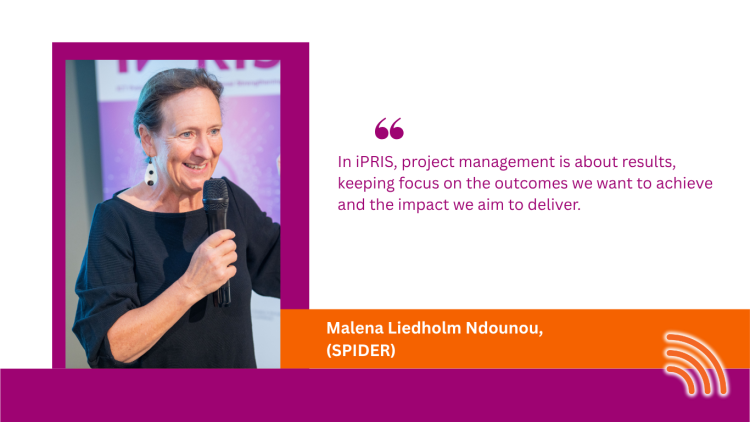
A central message from the session was that successful regulatory projects depend not only on technical expertise, but also on how clearly the problem is defined and how realistically the solution is designed. Malena further emphasised success factors beyond traditional results-based management, highlighting focus, simplicity, faith, and structured planning as essential elements for driving sustainable regulatory change.
Day 2 shifted focus toward the institutional and legal frameworks shaping telecom regulation in Sweden and the broader European context.
Legal experts Per Andersson and Antonia Wopenka from PTS introduced participants to the Swedish constitutional system, the structure of government institutions, and PTS's role as an independent regulatory authority. The discussion also explored how public financing, accountability structures, and institutional independence shape regulatory effectiveness.
A key emphasis was placed on the principle of independence in regulatory work.
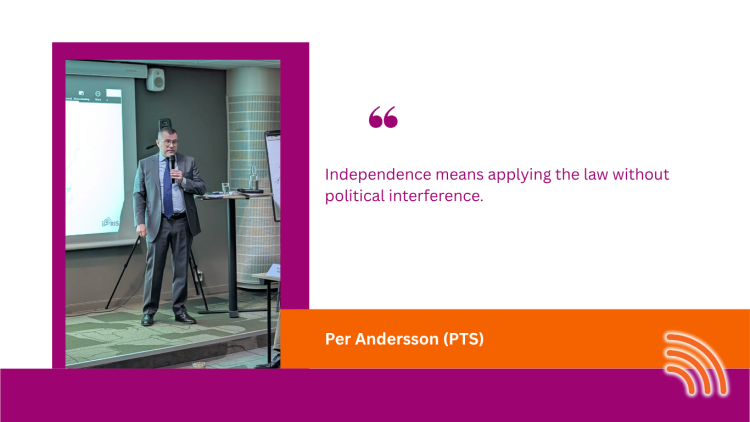
This reinforced the importance of safeguarding regulatory decisions from external influence in order to maintain credibility, fairness, and consistency in enforcement.
Complementing this perspective, Antonia Wopenka highlighted Sweden’s strong legal culture of openness and accountability, particularly in public administration. He stated:
“Transparency and access are the rule, and secrecy is the exception. Official documents should be accessible to all, and secrecy must always be grounded in law.”
Given that the EU forms the foundation of regulation in Sweden, a session on the overview of the EU, how it works and how Sweden navigates in the EU was insightful.
Digital connectivity is fundamentally about communications, particularly secure communications. Building on these, the second half of the day focused on emerging priorities in digital regulation.
Jesper Svedberg from PTS presented on secure communications and telecom preparedness, highlighting the importance of resilience, emergency readiness, and international cooperation in ensuring continuity of communication services during crises.
A session on the European Digital Identity Wallet by Per-Erik Vitasp illustrated how regulatory systems are evolving to support seamless, secure access to key national services across banking, healthcare, travel, and government platforms. By reducing reliance on repeated identity verification, the system represents a shift toward interoperable and user-centred digital governance.
The day concluded with a cybersecurity session by Gustav Söderlind. Cybersecurity has been an emerging threat to the telecom sector, and this session helped share insights into how regulatory frameworks aim to curb cybersecurity risks. Through the PTS regulations and the EU’s influence on cybersecurity policies, cybersecurity has been viewed as a question of digital resilience, regulatory oversight, and cross-border trust, reflecting the increasing interconnectedness of modern telecom systems.
As the week progressed, participants began to strengthen and refine their CIs through deeper engagement with project management methodologies. Malena Liedholm Ndounou (SPIDER) emphasised the importance of strategic planning.
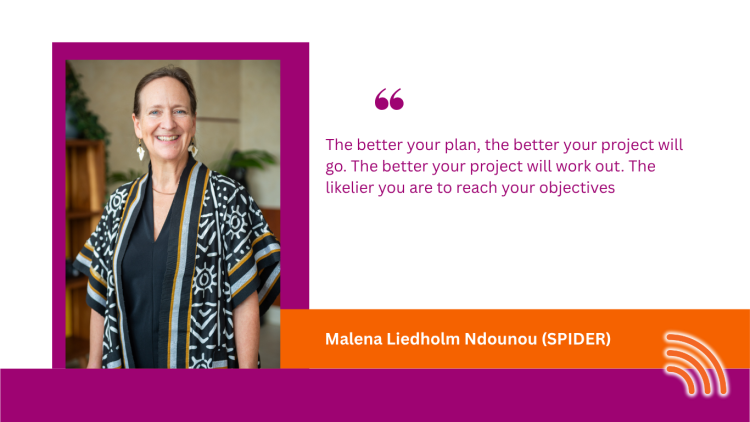
This was reinforced by the introduction of a structured seven-stage project cycle that guides participants through problem identification, objective setting, outcome definition, indicator selection, resource planning, stakeholder mapping, implementation, and MEAL.
Through case scenarios and examples from European Union and SPIDER-led projects, participants were encouraged to think critically about how regulatory ideas translate into real-world implementation.
DEI remained central to the discussions. The importance of inclusive regulatory design was highlighted, ensuring that digital transformation initiatives consider underserved communities, accessibility, and broader social equity dimensions throughout the implementation stages of a project. This was further echoed in reflections on budgeting and equity, with the reminder that:
“There is no such thing as a neutral budget, and a budget that does not seek to balance or to reduce inequalities will by definition contribute to reinforcing existing inequalities.” - Malena Liedholm Ndounou (SPIDER)
This day also included a field visit to the PTS, providing participants with practical exposure to the regulatory environment discussed in theory.
As the week drew to a close, participants continued to attend technical sessions on JEO numbering and spectrum management, deepening their understanding of telecom systems and regulatory evolution.
Discussions on numbering systems highlighted how traditional geographically bound structures are evolving into more flexible, user-centric frameworks driven by mobile technology. These shifts reflect broader changes in how communication services are structured and regulated in increasingly digital societies.
At the same time, participants explored challenges such as identity manipulation and fraud. A growing concern was the rise of SMS-based fraud, as criminals increasingly shifted from voice spoofing. This highlighted the need for continuously adaptive regulatory responses to emerging risks.
Another key discussion focused on telecom pricing regulation, where structured cost models were presented as tools to ensure that operators recover investment and operating costs while maintaining fair and sustainable market conditions.
iPRIS is committed to shaping an inclusive, digitally empowered future; hence, Diversity, Equity and Inclusion are central to the regulations. Marking the end of week one, the participants indulged in sessions on DEI led by SPIDER experts, Malena Liendholm Ndounou and Caroline Wamala Larsson.
Throughout the morning sessions, participants explored various concepts and frameworks in DEI. Starting with intersectionality, Caroline Wamala Larsson emphasised that inequality cannot be understood through gender alone but multiple identities, including age, gender, ethnicity, socioeconomic status, race, and religion, intersect to shape individuals’ access to resources, opportunities, and digital inclusion.
“Just as there's a gender digital divide, there's also an age divide, a race or ethnicity divide, and even a geographic divide. Many of you have talked about the rural divide in terms of how many people are actually online. So these divides also need to be considered because resources are not only about women, but also about age.” - Caroline Wamala Larsson(SPIDER)
On equity, Malena noted that having the same rights does not necessarily mean having the same opportunities. The participants explored ways to address barriers to equity, including affordability, digital literacy, relevance, safety, and security.
“Having the same rights does not necessarily translate into having the same opportunities. Equity is about targeted needs-based support.” - Malena Liendholm Ndounou(SPIDER)
The session on DEI ended with an emphasis on regulators' roles in designing inclusive systems, particularly in sectors like telecommunications, to ensure inclusion and accessibility for all, including people with disabilities. Key examples included assistive technologies such as wheelchair-accessible ATMs, audio-supported interfaces, and Braille. The session highlighted the need to proactively create inclusive environments, recognising that disability is not always permanent or visible, as ageing can lead to conditions like low vision, loss of fingerprints, or limited mobility.
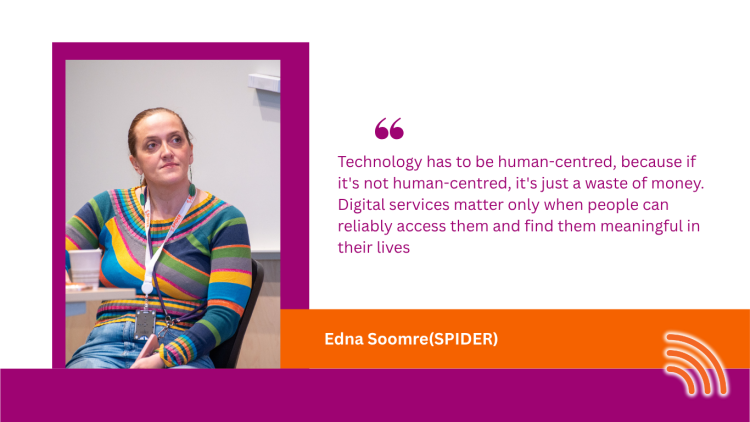
The afternoon sessions explored SPIDER’s role in inclusive development. Edna Soomre, JohnBlack Kabukye, and Katja Sarajeva introduced SPIDER’s projects. The projects were anchored in a human-centred approach to technology, as emphasised by Edna Soomre.
SPIDER has been working on inclusive digital and health innovation projects to strengthen access to essential services and build institutional capacity. Through initiatives such as Health Alliance for Digital Development and Action (HADDA) and HoliCare, SPIDER supports the development and localisation of healthcare solutions, including improved access to diagnostics and the integration of technology with training for health workers to enhance patient outcomes.
The sessions also highlighted broader digital governance considerations, including capacity-building approaches such as EU Twinning programmes that support collaboration between government institutions and international partners to address development needs.
Week One of the 8th iPRIS Cohort established a strong foundation for the telecom experts in Stockholm. Across the sessions, participants progressed from conceptual discussions of regulation to a more applied understanding of how policy frameworks, institutional structures, and technological change interact in practice. The week consistently emphasised the need to translate regulatory intent into actionable, measurable, and context-sensitive interventions.
A key insight that emerged was the evolving nature of telecom ecosystems, in which traditional systems are being reshaped by digital transformation, while new risks demand adaptive and forward-looking regulatory frameworks. In this context, Dr Caroline Wamala Larsson (SPIDER) emphasised the importance of trust and safety in digital transformation.
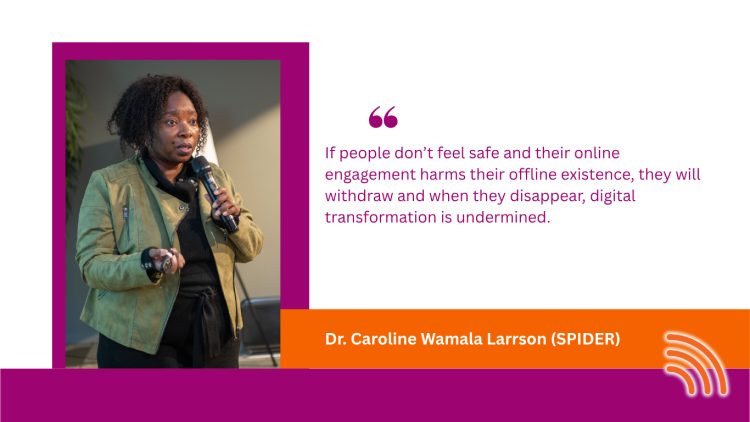
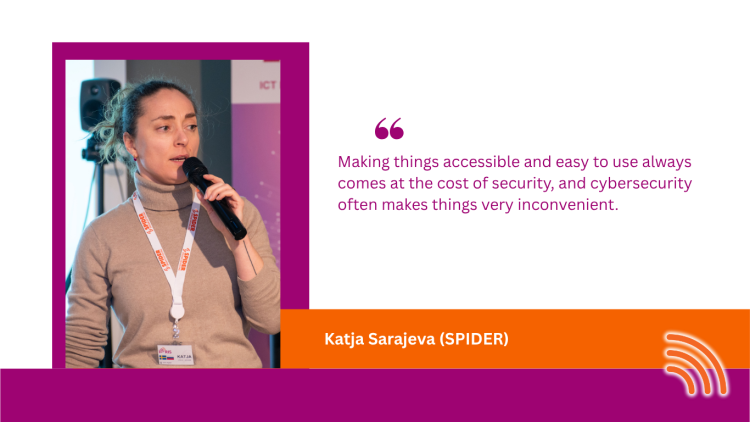
This was complemented by Katja Sarajeva (SPIDER), who highlighted the inherent trade-offs in digital systems.
Week One, therefore, marked the start of a deeper process of refining Change Initiatives into practical solutions that can strengthen digital inclusion and regulatory effectiveness across Sub-Saharan Africa.
iPRIS is coordinated and implemented by SPIDER in strategic and technical partnership with the Swedish Post and Telecom Authority (PTS) and Institut luxembourgeois de régulation (ILR), as well as ARTAC, CRASA, EACO, and WATRA.
iPRIS is funded by the European Union, Sweden, and Luxembourg as part of the Team Europe Initiative “D4D for Digital Economy and Society in Sub-Saharan Africa” (Code: 001).
By Prof. Caroline Wamala-Larsson
Having lived in Sweden for more than two decades, I have seen what coordinated telecommunications policy can achieve.
I remember arriving late one winter evening in Brussels for a conference. The city was unfamiliar, the streets quiet, and I was unsure how to get to my hotel. Standing at the station, I called my husband in Stockholm. Using online maps, he guided me step by step until I arrived safely. Across Europe, connectivity follows the user, not the border. Whether travelling from Sweden to Norway or further south to Spain, my phone works as if I never left home. Calls cost the same, networks are seamless, and the experience is largely invisible.
This is not accidental. It is the result of regulatory cooperation across borders and countries choosing to prioritise affordable, reliable connectivity for their citizens. In many parts of Africa, particularly along border regions, the reality is very different.
Across sub-Saharan Africa, border communities function as shared social and economic spaces rather than clear divides. Trade, family ties, and daily movement flow across boundaries that were colonially imposed rather than socially defined. Yet mobile networks do not reflect this reality. Phones frequently latch onto foreign signals without warning, triggering roaming charges or service disruptions. For many, this is not just inconvenient it is costly.

Consider Nana Mensah, a small bakery owner in Aflao, a town along the Ghana–Togo border. Her business relies heavily on mobile connectivity to coordinate with customers, place orders with suppliers, and manage deliveries. Yet even within a small radius, her phone may connect to a neighbouring country’s network instead.
The impact goes beyond her alone. Her customers struggle to reach her, orders are delayed or missed, and communication with suppliers of key ingredients becomes inconsistent. Transport arrangements become harder to coordinate, especially when timing is critical. Over time, these disruptions translate into fluctuating orders, unpredictable sales, and reduced business stability.
Each unintended network switch brings additional costs, but more importantly, it introduces uncertainty into a business that depends on reliability.

Similar dynamics play out across East Africa. For cross-border traders in Busia, transport operators in Namanga, or small businesses operating along regional corridors, connectivity is not optional it is a lifeline. It enables mobile payments, access to market information, coordination of medical teams. When networks fail or become expensive, productivity is directly affected.
From 9 to 12 March 2026, telecom regulators and experts convened in Accra, Ghana, under the iPRIS peer-to-peer programme, building on earlier exchanges held in Sweden in November 2025. The convening brought together national regulatory authorities from across Africa alongside regional bodies and international partners.
A key takeaway was clear: while mobile network coverage has expanded significantly across the continent, affordability and reliability particularly in border regions remain uneven. Encouragingly, practical solutions are emerging.
In Ghana, telecom regulators from the National Communication Authority-Ghana translated this challenge into a consumer awareness pilot in Aflao, helping residents understand how to configure their phones to avoid unintended cross-border roaming.
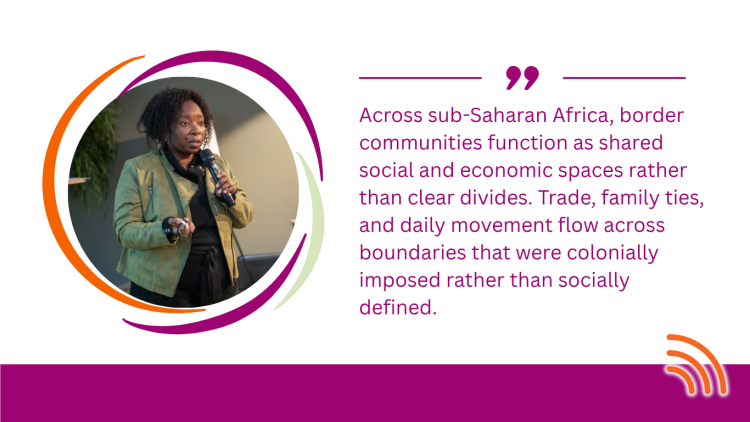
At a broader level, regional cooperation is beginning to reshape the landscape. In Southern Africa, the One Network Area (ONA) framework is demonstrating what is possible when regulators align. Countries including Botswana, Zambia, Zimbabwe, and Malawi have begun harmonising roaming tariffs, with reductions ranging from 10% to over 90% across voice, data, and SMS services. Early evidence suggests that lower prices can drive higher usage, offsetting potential revenue losses.
Closer to home, the East African Community’s ONA initiative has also made progress, significantly reducing roaming costs by treating cross-border communication within partner states almost as local calls. For businesses operating across Kenya, Uganda, Rwanda, and beyond, this has begun to ease the cost of staying connected.
What is needed now is a more intentional shift: from isolated reforms to fully integrated regional connectivity frameworks. First, regulators must accelerate harmonisation across regional blocs to ensure consistency in pricing, service quality, and consumer protection. Fragmentation undermines progress.
Second, policy must reflect the lived realities of border communities. Connectivity is experienced differently across gender, age, and income levels. For informal traders and small enterprises, even small cost fluctuations can have significant consequences.
Third, connectivity must be recognised as economic infrastructure. Cross-border trade, digital finance, and regional integration all depend on reliable communication. Addressing roaming challenges is therefore central to unlocking intra-African trade.
Finally, multi-stakeholder collaboration will be key. Regulators, telecom operators, regional organisations, and development partners must align to scale solutions.
Because connectivity is not only about communication it is also about safety, dignity, and participation.The ability to reach someone whether for business, emergency support, or simple reassurance should never depend on whether your phone has crossed into another network.
Watch more insights from Prof. Caroline alongside Norah Sitati from EACO below
Borgarfjordsgatan 12, Kista,SWEDEN
Postal Address: Stockholm University, Department of Computer and Systems Sciences/DSV, SPIDER, P.O Box 1073, SE-164 25 Kista, Sweden


Copyright © 2025 iPRIS. All rights reserved.