


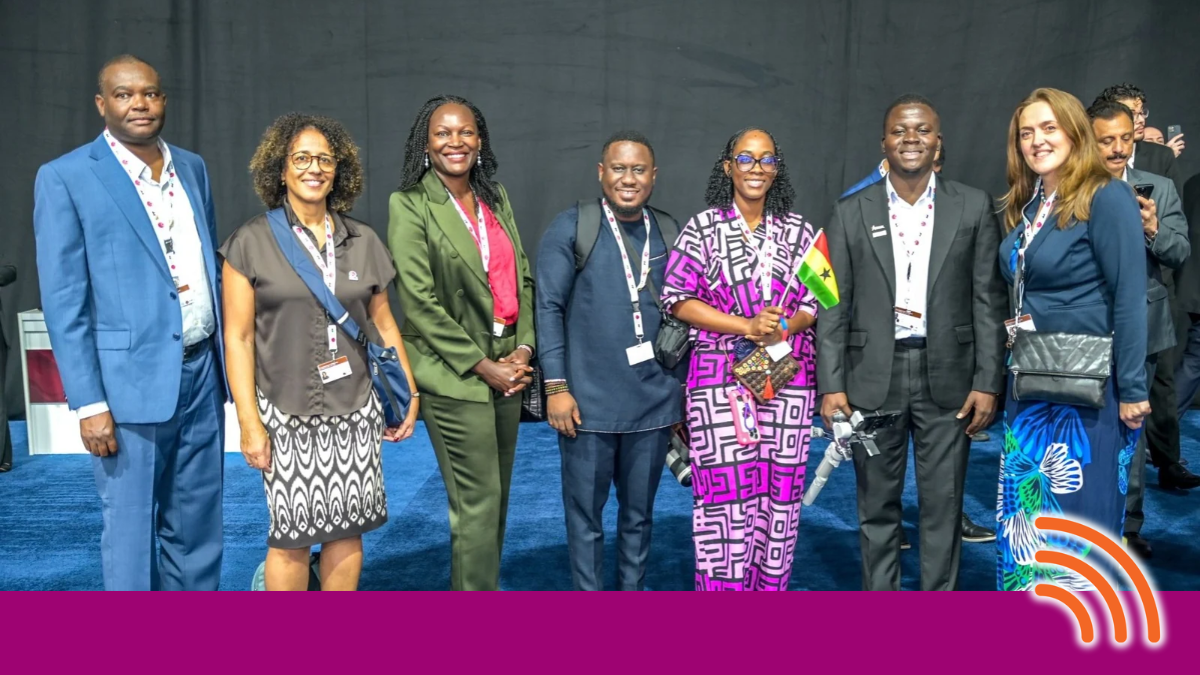
From reconnecting with telecommunications experts to engaging with regulatory institutions, the opening week of ITU PP-26 highlighted the importance of international cooperation and shared learning in advancing digital development.
SPIDER and Swedish Post and Telecom Authority representatives joined telecommunications regulators, policymakers and experts at the International Telecommunication Union (ITU) Plenipotentiary Conference 2026 (PP-26), in Doha, Qatar, from 9th to 27th November. The conference provides opportunities to strengthen existing relationships, engage with regulatory institutions and exchange experiences on the challenges shaping digital connectivity.
Held every four years, the conference brings governments together to determine the direction of the ITU, the United Nations specialised agency for information and communication technologies. Under the theme “Together for a Connected Digital Future”, PP-26 is addressing global connectivity, infrastructure resilience and emerging technologies, while Member States will shape the organisation's strategic and financial priorities for 2028–2031.
Advancing a connected digital future
During the opening ceremony on 9th November, ITU Secretary-General Doreen Bogdan-Martin highlighted both the progress made in digital connectivity and the challenges that remain.
“With 99% of its population online, Qatar has achieved near-universal connectivity, supported by extensive fibre and advanced mobile networks. Our task now is to help every country advance from its own starting point.”
Her remarks reflected the importance of recognising different national circumstances while working towards a more connected digital future.
According to ITU's Facts and Figures 2025, an estimated 2.2 billion people worldwide remained offline in 2025. This highlights the continued need to expand connectivity while addressing barriers related to affordability, accessibility and service quality.
For telecommunications regulators, these challenges require practical responses supported by institutional expertise and opportunities to exchange experiences across countries.
Council elections mark an important milestone
A significant highlight of PP-26 has been the election of Member States to the ITU Council, which oversees the organisation's work between Plenipotentiary Conferences.
The results are particularly relevant to iPRIS, reflecting the continued participation of Sweden and several African countries in international telecommunications governance.
Their representation on the Council provides opportunities to contribute to discussions and decisions that will shape the future of digital connectivity, regulatory cooperation and telecommunications development.
Strengthening partnerships through regulatory exchange
Beyond the formal conference proceedings, PP-26 provided opportunities for iPRIS to reconnect with former participants and engage with telecommunications experts from Tanzania, Gabon, Guinea and Kenya.
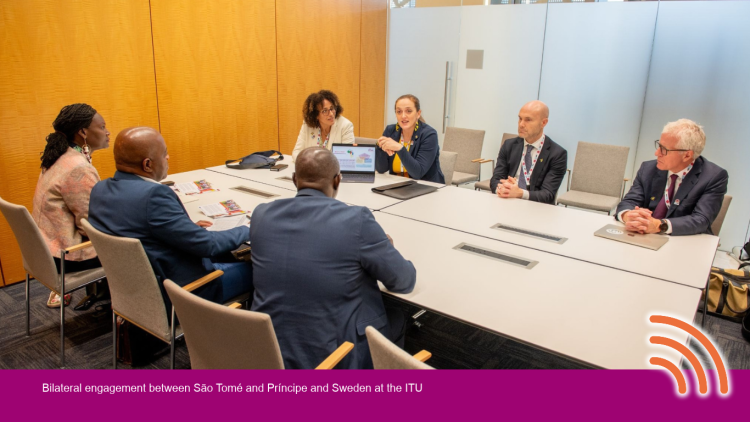
Discussions with ARTAC focused on ongoing iPRIS Workstream activities, while a bilateral engagement between Sweden and São Tomé and Príncipe provided an opportunity to discuss the project's approach to regulatory cooperation and peer learning. A bilateral meeting between Sweden and The Gambia also formed part of the week's engagements.
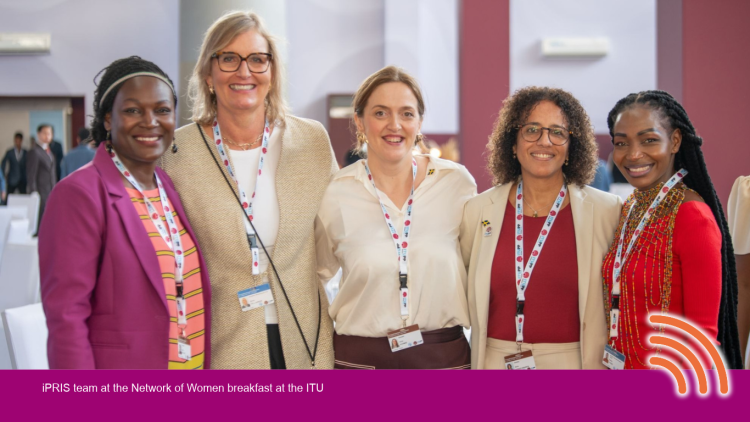
The opening week included the ITU Network of Women breakfast, attended by Edna Soomre and Alícia Borges Månsson of SPIDER, providing a space for professional networking and discussions around women's participation in the telecommunications sector.
The value of collaboration was further highlighted during an interview at PP-26 with Björn Blondell, Head of Division, Market Development at the Swedish Post and Telecom Authority (PTS). Reflecting on projects such as iPRIS, he emphasised the importance of partnerships and mutual learning:
“Working together strengthens our institutions and creates opportunities to learn from one another. By sharing knowledge and experiences, we can build stronger foundations for digital transformation.”
His reflections capture an important aspect of iPRIS, where telecommunications regulators and experts from Africa and Europe exchange experiences and strengthen institutional capacity through peer learning. The project's Change Initiatives support practical regulatory priorities, including spectrum planning, broadband access, consumer protection and emerging technologies.
As PP-26 continues, the Council election results and engagements in Doha highlight the importance of international representation and sustained cooperation. For iPRIS, these developments reinforce the value of connecting global digital priorities with national regulatory experience to support more inclusive and resilient digital development.
iPRIS is coordinated and implemented by SPIDER in strategic and technical partnership with the Swedish Post and Telecom Authority (PTS), Institut luxembourgeois de régulation (ILR), Autoridade Nacional de Comunicações (ANACOM), as well as ARTAC, CRASA, EACO, and WATRA.
iPRIS is funded by the European Union, Sweden, and Luxembourg as part of the Team Europe Initiative “D4D for Digital Economy and Society in Sub-Saharan Africa” (Code: 001).