



Interview with Mbirimuje Ngupandjara - Revenue accountant, Communications Regulatory Authority of Namibia, on collaboration and universal access for ICT advancement
[et_pb_section fb_built="1" admin_label="section" _builder_version="4.16" global_colors_info="{}"][et_pb_row admin_label="row" _builder_version="4.16" background_size="initial" background_position="top_left" background_repeat="repeat" global_colors_info="{}"][et_pb_column type="4_4" _builder_version="4.16" custom_padding="|||" global_colors_info="{}" custom_padding__hover="|||"][et_pb_code _builder_version="4.23.1" _module_preset="default" global_colors_info="{}"][/et_pb_code][et_pb_text admin_label="Text" _builder_version="4.23.1" background_size="initial" background_position="top_left" background_repeat="repeat" global_colors_info="{}"]
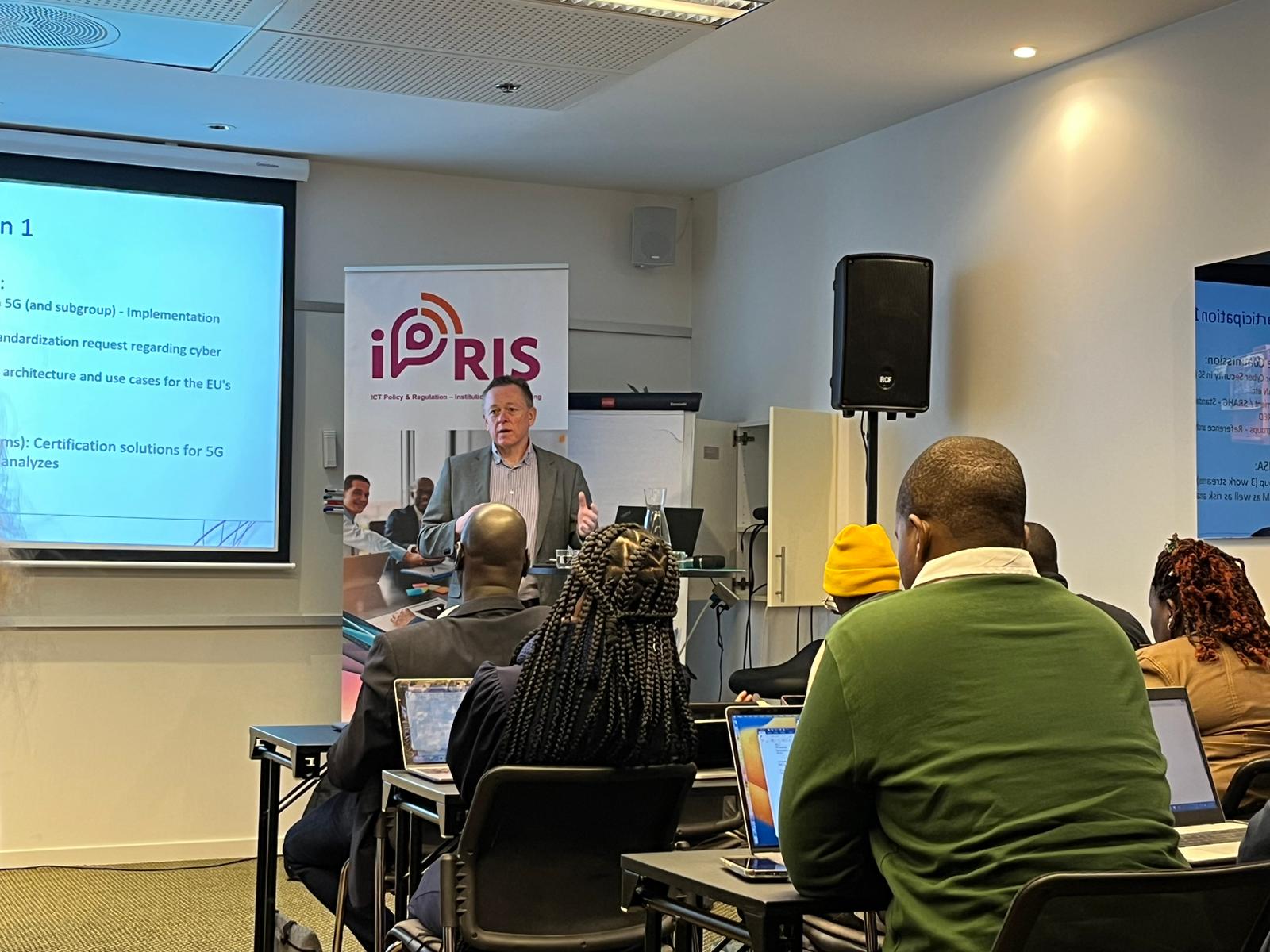
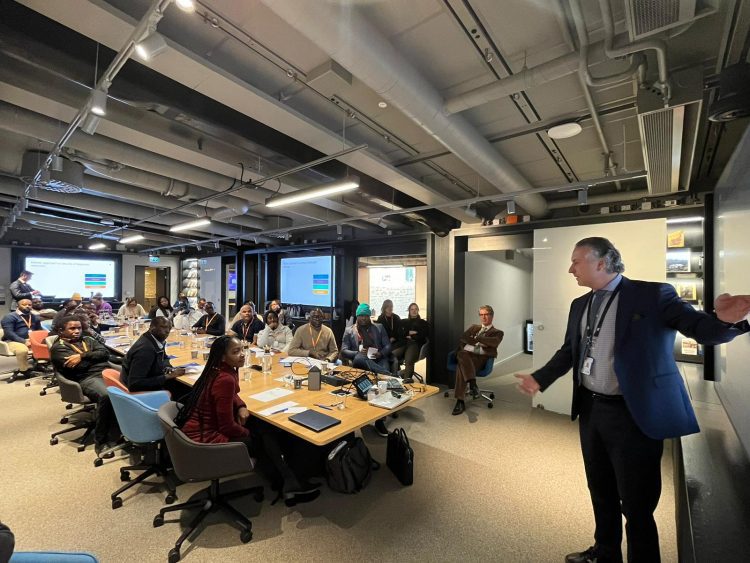
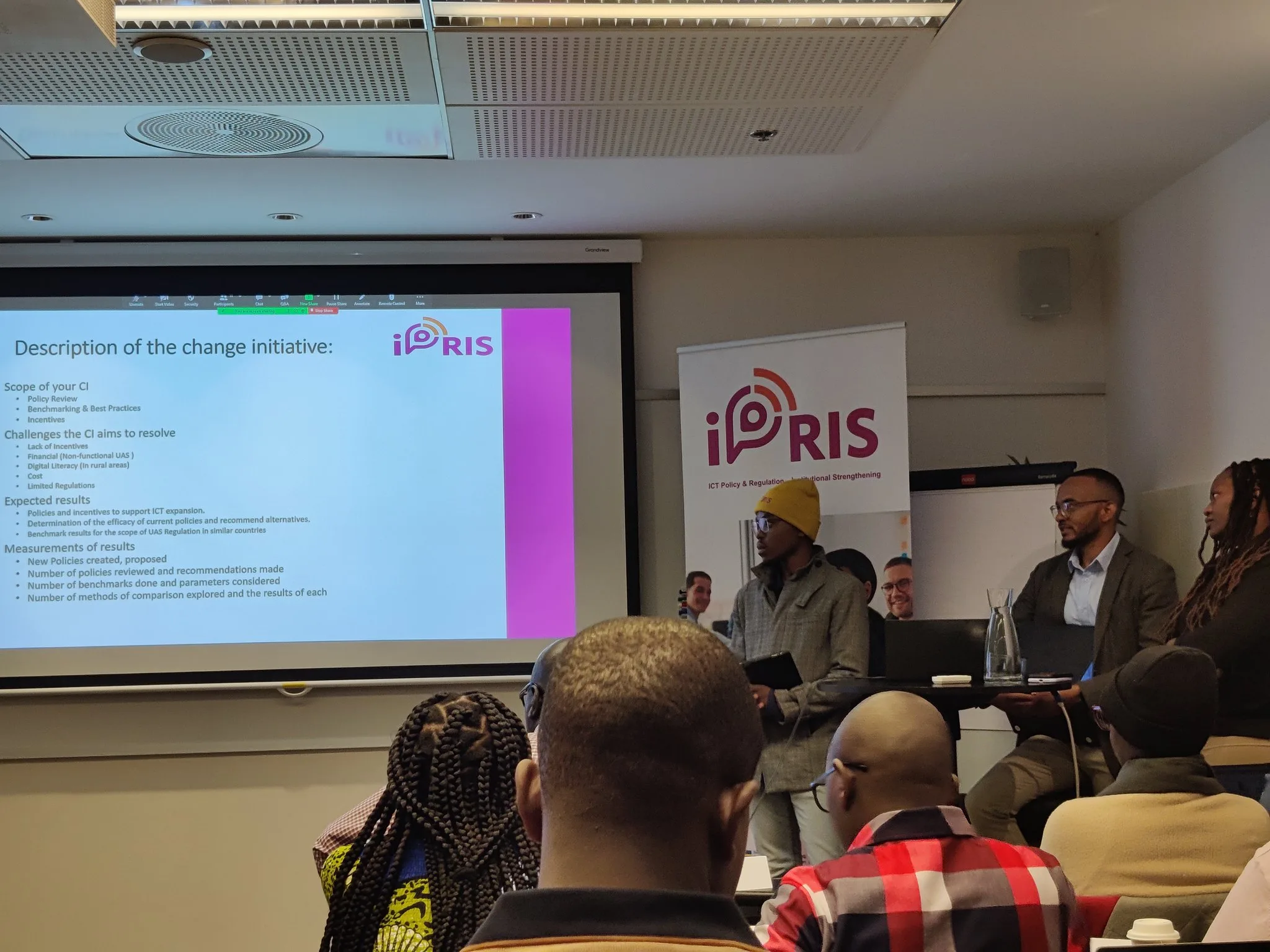
Alexandra Högberg from SPIDER Center interviewed Mbirimuje Ngupandjara - Revenue accountant, Communications Regulatory Authority of Namibia, along the sidelines of the Sweden 2023 phase. In this interview, Mbirimuje Ngupandjara weighs in on collaboration and universal access for ICT advancement.
This interview has been edited for clarity and readability.
Mbirimuje Ngupandjara: My name is Mbirimuje Ngupandjara, revenue accountant for the Communications Regulatory Authority in Namibia (CRAN). I'm responsible for everything related to revenue collection, ensuring that the regulator has funds to run all its operations.
AH: During the Spider PTS programme, you managed to work on the Completion of the consumer protection regulations and implementation of QOS regulations - could you recap the project and how it has been of impact to the sector?
MN: Well, this is actually one of the Change Initatives (CI's) I believe that produced really great results. In quality of service, it's something that's quite important. We don't only want our operators to provide services to the people, but then lack service. When we carried out this project, we undertook to find out from consumers in terms of whether they are aware of their rights. Where do they complain if the quality of service is not good or if they feel like they are violated in terms of what is due to them and the end consumers, initially, were not aware, and as a regulator, we took time to do surveys.\, and I must say our communications department did a stellar job. All the trade fairs, they always have consumer awareness.
The awareness is out there. Because initially, consumers were not aware of that, and one particular initiative has to do with our national broadband policy, of which in terms of coverage, CRAN as a regulator was able to ensure that as we meet the minimum entry requirements of ensuring that every user has an internet connection of two megabytes per second. In the coverage rate, the success rate is 80%. So we have actually met our program policy in that. However, that's an entry requirement. But we have set the standard. As a regulator, we dictate to the operators that if you're providing internet, it cannot be less than this. So now we move on to the next part, which is obviously more speed, as we've heard here in Sweden, it's 100 megabits per second. We are quite far from that, but it's still achievable.
As a regulator, we are doing our job, and the market actually responds well, to the regulator. We enforce, they comply, they make it happen in there is actually a very good dialogue between the regulator and the stakeholders, the business operators, so we consult them already in advance. We're thinking about ABC and D, how can we make it possible, involve them in regulations. We have a lot of stakeholder engagements as well. By the time that they need to take this to market, they have already agreed in essence, and when we pass the regulations, particularly when it comes to tariffs, and then you know, the standardisation of technology, they are always important.
AH: Could you please give an overview of the ICT sector in your country? What specific challenges does your country/region face in the current global telecommunication landscape, and how will you change initiative address this?
MN: In terms of Namibia, we are talking about a country that has a population density of three people per square kilometre. We have about 2.6 million inhabitants, but the country is quite fast. We have people that are more or less 40% to 50% that are residing in the capital and that you will consider as an urban area. So, when it comes to connectivity in the urban areas, in terms of our broadband policy, we are on par, we are on track. However, our challenge comes in the rural areas, because we have close to 60% of people that reside in the rural areas. The first challenge that we can say is that people do not have access to digital ICT services, primarily the infrastructure is not there. The second challenge is the language barrier as well, those that will be in rural areas.
Also, most of them do not speak English as their native language. There is that barrier when it comes to participating in ICT services, ecommerce, etc. But addressing the first area of the challenge has to do with rolling out ICT infrastructure to rural areas, and due to a population which is not quite large, in terms of the operators recovering their revenue from the local communities has been a challenge and operators cannot merely just by willpower, even though they want to roll out services because there is no business case. They will not be able to recover this OPEX and CAPEX that is required. Where we come in as a regulator then has to do with universal access regulations in that’s where our CI is mainly focused, because as part of our strategy as CRAN, we want to ensure that you know, in terms of universal access, that everyplace, every child, the Namibian child, even in the rural area, will have access to ICT services. We saw this was a big challenge with the COVID 19 pandemic, where in urban areas we have children that are learning through digital means either on WhatsApp, or on Zoom.
In terms of the rural population, they didn't even have network coverage, let alone access to the internet. Then you have to send them home, and then there'll be a year behind in terms of education. Our CI aims to ensure that we get the operators on board, to roll out infrastructure, and trying to find ways as a regulator hub to support our local stakeholders in making sure that when they put up a site, they can also recover the operational costs because that's the biggest thing, monetising a site ensuring that the local community makes use of the site in that you don't just merely put up a site, and then they don't use it. We have plans and strategies how to do that, and together with management team, and support from our regional body, CRASA will be working urgently as a matter of urgency on this to ensure that we bring a change that nobody in the rural areas should be left behind. That's the crux of our CI: to provide ICT services in rural areas in the underserved area so that all the Namibian population can have access as a matter of life.
AH: How can regulators contribute to the advancement of the ICT sector in Africa?
MN: What we've seen from all the discussions in all the training that we've received, every country has its own unique challenges. The biggest one, or the biggest gap in Africa that we have identified is the lack of collaboration. I can take the EU, for instance, where you have a standard set of regulations which are passed down throughout the whole zone. That can be linked to the advancement or how advanced they are. They all have the different infrastructures and minor variances. But what we can learn from it's really the collaboration between all the different NRAs, the different stakeholders, the MNOs, the different government agencies, and local authorities and then we'll see a change because just trying to push regulations and everybody has to comply doesn't necessarily bring everybody to the table to contribute. But when we take the collaborative approach, then it makes everything so easier. As an example, we have stock up.
A classic example from Sweden, that is where every citizen or operator can actually log in and say, I want to lay fiber in this area, or I want to connect, where is fiber, and everybody has access to this. You don't get multiple people digging along the street, or somebody digging in the street, and then they damage somebody else's fiber, and this is a challenge that we have in Africa, where you have two operators on the same street, one digging on the other side, just to provide fiber, and the end result is the end user has to pay for that cost. But if you have everybody just doing one thing, now you can focus on providing excellent service to the end consumer and then you end up reducing the cost. Even infrastructure sharing, we've learned a lot how different operators share their infrastructure. I believe this is actually key in terms of a rural population, where you might have a backhaul from one operator where everybody can share and collaborate so that they can bring services to the one area.
There is national roaming, for instance, we all know about international roaming, but, you know, different operators, switching networks, particularly in rural areas where there's not a lot of people that will use the sites. So that might be an option as well, but the key is we need harmonised regulations across Africa. We need to learn from what other countries have done. Like taking an example Kenya has done a lot of work on universal access, and we have learned what not to do or what to try, that might yield better results. So just that international cooperation is needed instead of every country just trying to solve their own problems while somebody else might have the solution already.
[/et_pb_text][/et_pb_column][/et_pb_row][/et_pb_section]