


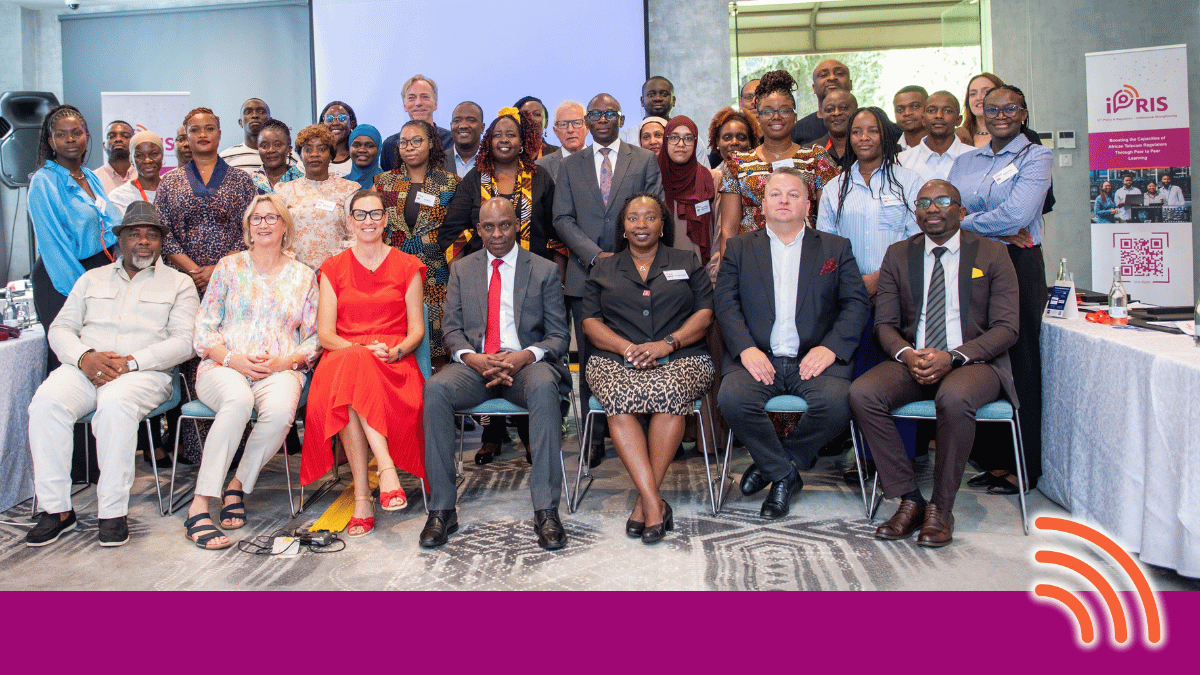
8th iPRIS cohort follow- up phase in Nairobi, Kenya
NAIROBI, Kenya — 5 October 2026
Telecommunications regulators and experts from across Africa and Europe are meeting in Nairobi for a five-day iPRIS peer-to-peer exchange. The discussions will focus on advancing country-led Change Initiatives, sharing regulatory experiences and responding to emerging digital challenges.
The ICT Policy and Regulation – Institutional Strengthening (iPRIS) project is currently convening its eighth cohort in Nairobi, bringing together telecommunications regulators and experts from across Africa for a peer-to-peer exchange focused on strengthening regulatory capacity, cooperation and responses to the continent’s rapidly evolving digital landscape.
Running from 5–9 October 2026, the peer-to-peer session brings together national regulatory authorities from Liberia (LTA), Mauritius (ICTA), Namibia (CRAN), Sierra Leone (NatCA), Tanzania (TCRA) and Zimbabwe (POTRAZ), alongside regional regulatory organisations, notably the Communications Regulators’ Association of Southern Africa (CRASA), East African Communications Organisation (EACO) and West Africa Telecommunications Regulators Assembly (WATRA). The Nairobi phase also connects African regulators with iPRIS implementing partners and experts from Sweden (SPIDER & PTS), Luxembourg (ILR) and Portugal (ANACOM), creating a platform for sharing regulatory experience across national, regional and international contexts.

The opening session on Monday 5th October morning, moderated by Edna Soomre, iPRIS Project Lead, set the tone for five days of peer learning, practical discussions and knowledge exchange on some of the major global issues shaping telecommunications regulation and Africa’s digital future.
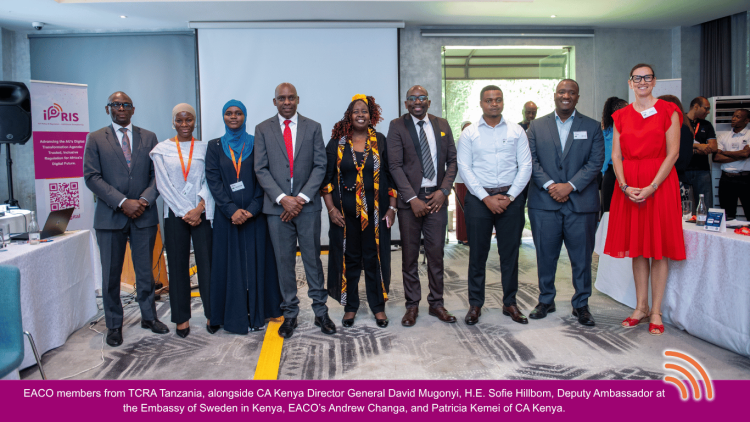
In his welcoming remarks, David Mugonyi, Director General of the Communications Authority of Kenya, underscored the importance of regulatory cooperation as African countries navigate an increasingly complex and interconnected digital environment.
“Across Africa, telecom regulators are confronting difficult questions around competition, consumer protection, cybersecurity, trust, online safety, inclusion and sustainable investment. We face similar challenges, but we have diverse approaches and unique solutions,” Mugonyi said. “Learning from a regulator’s approach in Namibia or drawing inspiration from an innovative solution in Sierra Leone is invaluable.”
His remarks reflected a central principle of the iPRIS peer-to-peer approach: while countries have different regulatory and institutional contexts, many of the challenges created by digitalisation increasingly transcend national borders. Sharing regulatory experience enables regulators to learn what has worked elsewhere, examine different approaches and adapt relevant solutions to their own national contexts.
Prof. Caroline Wamala Larsson, Director of SPIDER, highlighted the crucial role regulators play in determining how Africa’s digital transformation is experienced by citizens, businesses and communities.
“Each country has its own regulatory challenges and institutional context. But sharing what has worked, what has not, and what you are discovering along the way has tremendous value,” Wamala Larsson said.
“Ultimately, Africa’s digital transformation will not be measured only by how much infrastructure we build or how rapidly we introduce new technologies, including AI. It will also be measured by who can access these technologies, who can use them meaningfully, who benefits from them, and who may still be left behind.”
H.E. Sofie Hillbom, Deputy Ambassador at the Embassy of Sweden in Kenya, welcomed the experts to Nairobi and commended Kenya’s leadership in digital innovation. She noted that Sweden’s co-financing of iPRIS, together with the European Union and Luxembourg, reflects a commitment to strengthening institutions that contribute to development and long-term prosperity.
“Digital technologies transcend sectors and enable socio-economic growth,” Hillbom said, emphasising the importance of regional cooperation in responding to shared challenges such as cybersecurity.
From peer learning to institutional change
Over the next five days, regulators will focus on the progress of their Change Initiatives, also known as practical institutional projects developed by each regulatory authority to address a specific regulatory challenge or priority in their country. The change initiatives are designed to translate learning from the iPRIS peer-to-peer sessions into concrete action within participating regulatory institutions.
Working in peer groups, telecom regulators will present progress on their projects, discuss challenges encountered during implementation and draw on the experiences of colleagues from other countries to strengthen their approaches. Through this exchange, regulators working on similar or related challenges can compare experiences, test ideas, and identify solutions they can adapt to their respective national and institutional contexts.
The Change Initiatives address regulatory priorities including spectrum management, connectivity, cybersecurity, consumer protection and digital inclusion. Launched during the cohort’s first convening in Sweden in May 2026, the initiatives have now reached their halfway point. In Nairobi, regulators from across the six African countries will share their experiences, progress and lessons with one another, comparing how different countries are responding to similar regulatory challenges. Colleagues from the Swedish Post and Telecom Authority (PTS) will also take part, both in Nairobi and remotely, sharing experiences from the Swedish and European regulatory context. The exchange will also include Prof. Fredrik Blix of Stockholm University, who will engage with peers on cybersecurity, and Hans Hedin from PTS, joining remotely, as discussions explore strategic foresight. Across the sessions, experts from Africa and Europe will exchange experiences, compare approaches and consider how evolving technologies, risks and regulatory challenges are being addressed across different jurisdictions. Following the Nairobi exchange, regulators will continue implementing and refining their Change Initiatives, with final reports due in May 2027 documenting progress, results and institutional learning.
iPRIS is coordinated and implemented by SPIDER in strategic and technical partnership with the Swedish Post and Telecom Authority (PTS), Institut luxembourgeois de régulation (ILR), Autoridade Nacional de Comunicações (ANACOM), as well as ARTAC, CRASA, EACO, and WATRA.
iPRIS is funded by the European Union, Sweden, and Luxembourg as part of the Team Europe Initiative “D4D for Digital Economy and Society in Sub-Saharan Africa” (Code: 001).