

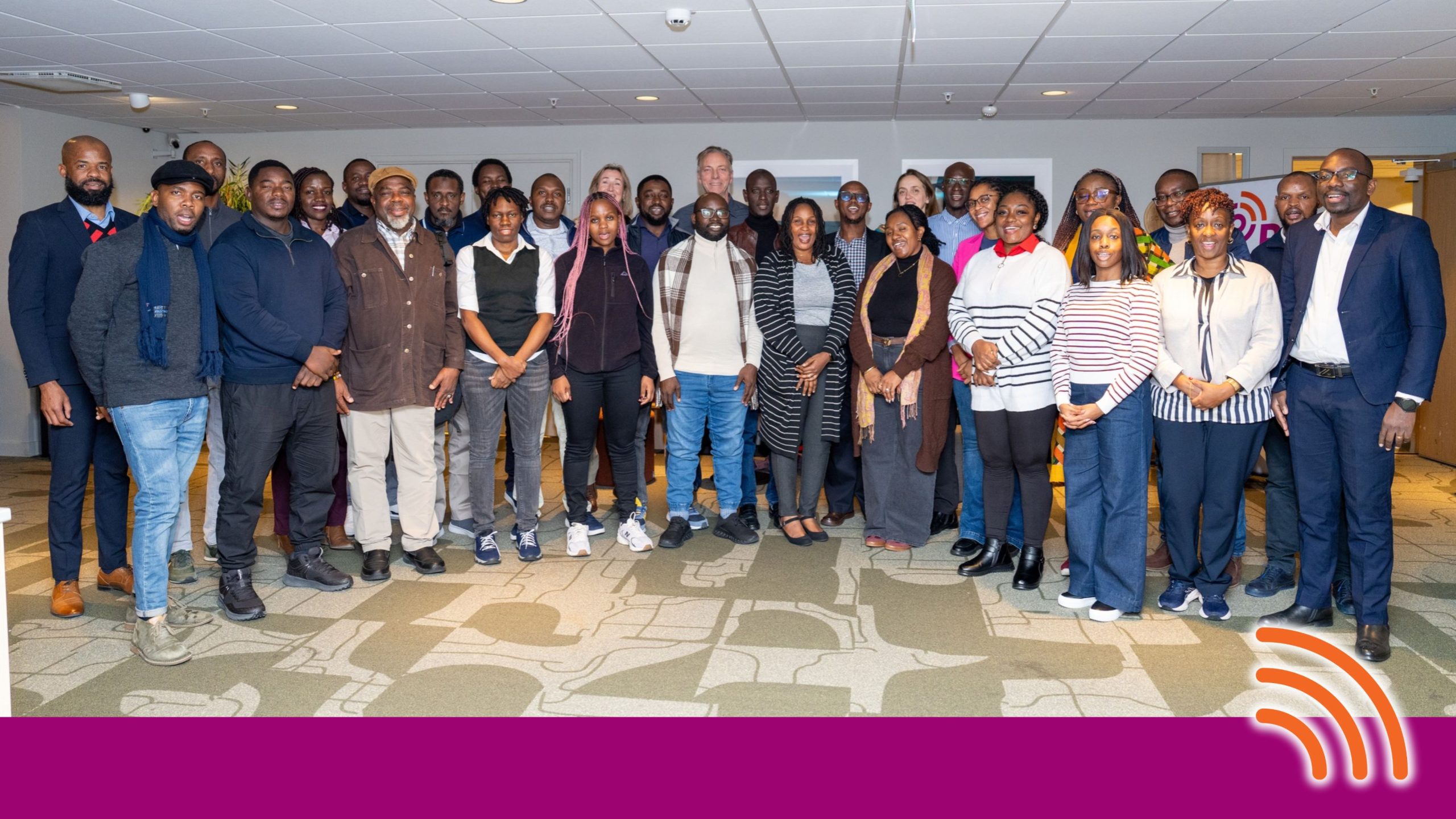
The 10th iPRIS cohort began its iPRIS cycle in Stockholm on 9 November 2026, bringing together telecom experts from six Sub-Saharan African National Regulatory Authorities (NRAs): The Gambia’s Public Utilities Regulatory Authority (PURA), Kenya’s Communications Authority (CA), Lesotho Communications Authority (LCA), Nigerian Communications Commission (NCC), Uganda Communications Commission (UCC) and Zambia Information and Communications Technology Authority (ZICTA). They were joined by experts from Sweden’s Post and Telecom Authority (PTS), SPIDER and Portugal's Autoridade Nacional de Comunicações (ANACOM).
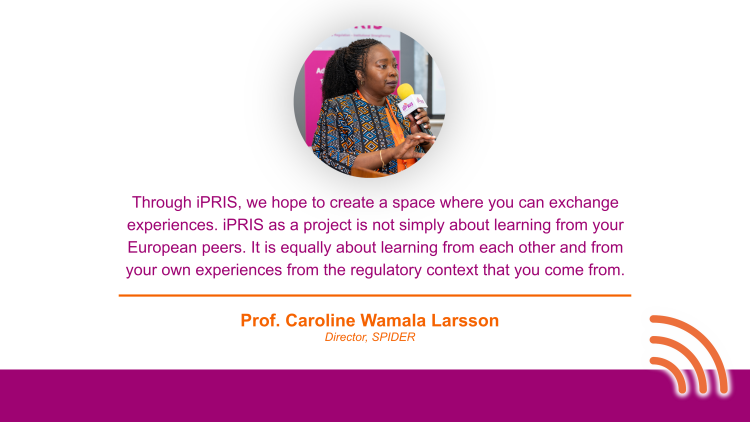
The European round is an important part of the iPRIS peer-to-peer learning cycle. It provides a platform for regulators to exchange experiences, explore different regulatory approaches, and strengthen their Change Initiatives (CI) through discussions with European counterparts and fellow African experts.
The first week in Stockholm focused on defining the NRA’s Change initiatives, guided by sessions on project management, Monitoring, Evaluation, Accountability, and Learning (MEAL) and Diversity, Equity and Inclusion (DEI). Discussions also explored Joint European Union (JEO) broadband deployment, regulatory frameworks, numbering and addressing, and consumer protection, alongside presentations on SPIDER’s projects and a visit to PTS.
Building common ground: Shared regulatory priorities
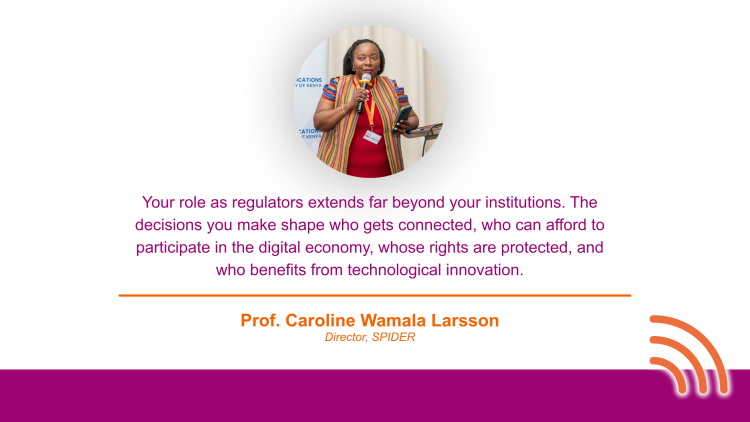
Despite working in different regulatory environments, the African telecom experts face several shared challenges. This was noted during the opening discussions on Monday, where SPIDER Director Prof.Caroline Wamala Larsson highlighted that their decisions influence connectivity, affordability, digital participation and access to the benefits of technological innovation.
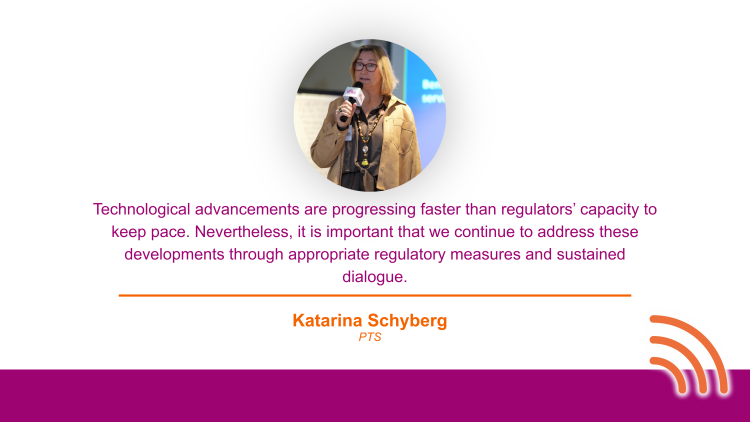
The sessions also highlighted telecom experts' ability to carry out their mandates, with insights from PTS’ Per Andersson and Antonia Wopenka. They introduced Sweden’s political and regulatory framework and explained the roles of government institutions and the safeguards supporting regulatory independence, transparency, and public accountability. The discussion explored PTS’s mandate across electronic communications, postal services, spectrum management, cybersecurity and emergency preparedness.
Discussions also covered regulatory financing, enforcement, and regulatory independence. While sharing their contexts, Uganda’s team explained UCC’s process for appointing the Executive Director and conducting annual licence reviews to ensure operators meet their regulatory obligations. Nigeria’s delegation explained how the NCC enforces fines by withholding regulatory assistance from non-compliant operators, while allowing smaller operators to pay in instalments. Additionally, the Portugal team presented ANACOM’s cost-based approach to regulatory fees, highlighting the challenge of financing new responsibilities such as AI and digital services.
Sharing and comparing these experiences enabled the experts to consider how institutional arrangements affect regulators’ ability to carry out their mandates.
Addressing telecom challenges through Change Initiatives
Central to iPRIS are the Change Initiatives, NRA-focused practical projects that aim to address specific challenges in their regulatory environments.
The 10th iPRIS cohort initiatives address a number of regulatory priorities, including, numbering resource scarcity, strengthening the monitoring of digital inclusion programmes, promoting fibre-ready buildings, improving the transition to newer generations of mobile networks, developing regulatory frameworks that reflect African realities, as well as addressing emerging risks through stronger consumer protection and responsible AI use.
The discussions brought out different perspectives on these challenges. Uganda highlighted the importance of measuring the impact of digital inclusion programmes, noting that expanding access must go hand in hand with tracking who benefits and whether interventions are achieving their intended outcomes. Nigeria emphasised the need for collaboration across stakeholders, including operators and local governments from the outset of a project.
Lesotho’s presentation highlighted the need to consider consumers and essential services when transitioning to newer mobile technologies. Kenya highlighted the importance of developing digital regulations that reflect African realities, as global platforms and AI technologies do not always account for local contexts and consumer needs. Zambia, meanwhile, stressed the need for transparency, human oversight and accessible consumer redress as AI becomes increasingly integrated into digital services. The Gambia’s experience also underscored the importance of effective numbering resource management in supporting the growing demand for connectivity.
Throughout the presentations and discussions, one thing was clear: These initiatives sought to address regulatory challenges that affect livelihoods, the country’s different sectors and economic growth.
Strengthening project design and implementation
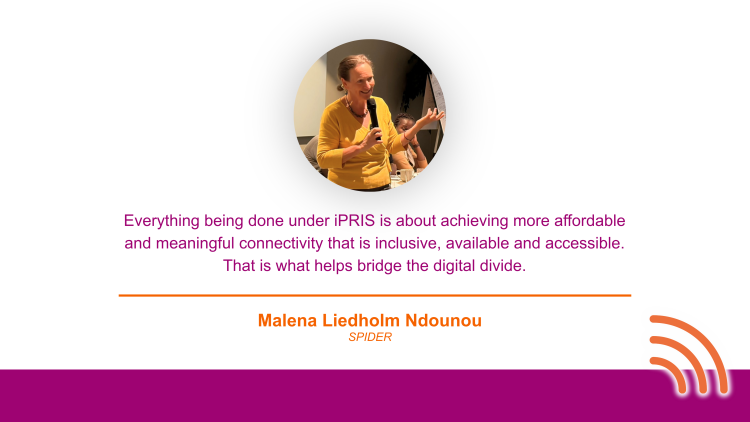
iPRIS project is built on results-based project management. After introducing the Change initiatives, the experts focused on the project and action plans through sessions on project management and Monitoring, Evaluation, Accountability and Learning (MEAL), led by Malena Liedholm Ndounou and Belinda Milton (SPIDER). The sessions highlighted the importance of defining realistic outcomes, setting clear milestones and engaging relevant stakeholders. These elements help ensure that project planning, implementation, monitoring and evaluation remain focused on the intended results and contribute to meaningful change.
As Malena Liedholm Ndounou explained, the ultimate goal is to advance inclusive and meaningful connectivity.
Diversity, Equity and Inclusion
How can regulators ensure meaningful and inclusive connectivity?
This was the basis of discussions on DEI led by Prof. Caroline Wamala Larsson, SPIDER. Her discussion built on the fact that providing network coverage does not automatically mean everyone can access, use or benefit from digital services. She highlighted that many people currently live in areas with network coverage but remain offline because of barriers such as device affordability, data costs, and limited digital literacy. Gender, age, income, disability, education and geographical location, as well as choice and accessibility, influence people's ability to access and benefit from digital services. She highlighted that regulators should ensure they do not reinforce existing inequalities by excluding marginalised communities from digital participation.
Earlier in the week, while explaining the transition from the Rural Communications Development Fund to the Uganda Communications Universal Service and Access Fund (UCUSAF), James Mpango of UCC highlighted the Fund's broader mandate to promote access to communication services in underserved communities, noting that gaps in access can persist even within urban areas and require targeted interventions.
Exclusion happens in many dimensions, including even within urban areas; you find that there are segments of the community that are not catered for. So we are obliged to continue to work, identify these areas, and initiate projects that target the excluded members of the community. -James Mpango, UCC
Exploring Sweden’s regulatory and digital landscape
Technical sessions led by PTS experts provided an opportunity to examine Sweden’s approaches to broadband deployment, numbering and addressing, and consumer protection.
On broadband deployment, Andreas Wigren and Jens Ingman (PTS) presented Sweden’s market-led approach, complemented by public investment to extend connectivity, including in sparsely populated areas where infrastructure deployment can be costly. Experts were also introduced to how PTS monitors broadband coverage through national mapping.
Discussions on numbering and addressing, led by Jesper Simons and Albin Frank, examined how PTS manages national numbering resources, including measures to combat telephone number spoofing and requirements for operators to block suspicious calls.
Consumer protection was another key area. Lisa Gurner and Jonas Fink Öhlmer (PTS) then highlighted Sweden’s consumer protection framework, covering consumer rights, access to essential communication services and provisions for underserved communities and persons with disabilities.
Insights from SPIDER’s development projects
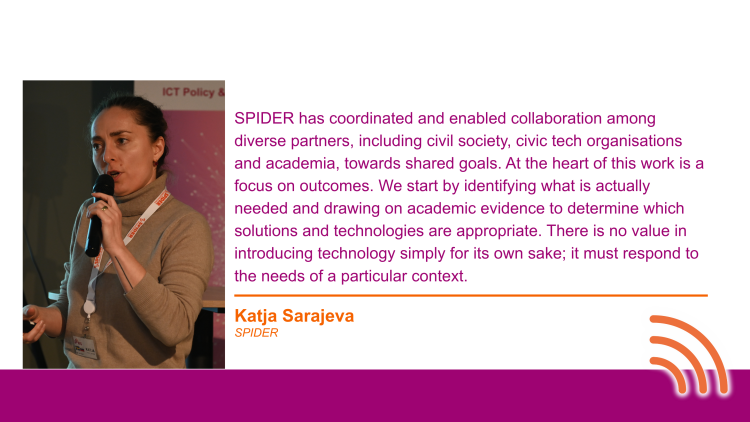
The cohort also gained insights into SPIDER’s broader work across digital health, education and research. Presentations highlighted projects ranging from efforts to improve health information systems in Somalia and support mobile-assisted cervical cancer screening in Uganda, to strengthening digital infrastructure and research capacity at universities in Africa and beyond.
Across these examples, SPIDER highlights that digital solutions should respond to clearly identified needs, involve relevant stakeholders from the outset and be supported by the skills, infrastructure and institutional capacity required to sustain them.
Continuous peer discussions
The first week has laid the groundwork for the remaining European round, combining discussions on shared regulatory priorities with introductions to their change initiatives. As the cohort continues, they will build on these exchanges through further technical sessions, institutional engagements and regional regulatory knowledge exchange, as they will be joined by representatives from the West Africa Telecommunications Regulators Assembly (WATRA), East African Communications Organisation (EACO), and Communications Regulators' Association of Southern Africa (CRASA).
iPRIS is coordinated and implemented by SPIDER in strategic and technical partnership with the Swedish Post and Telecom Authority (PTS), Institut luxembourgeois de régulation (ILR), Autoridade Nacional de Comunicações (ANACOM), as well as ARTAC, CRASA, EACO, and WATRA.
iPRIS is funded by the European Union, Sweden, and Luxembourg as part of the Team Europe Initiative “D4D for Digital Economy and Society in Sub-Saharan Africa” (Code: 001).